
Research Helicopter at a Polar Ice Station
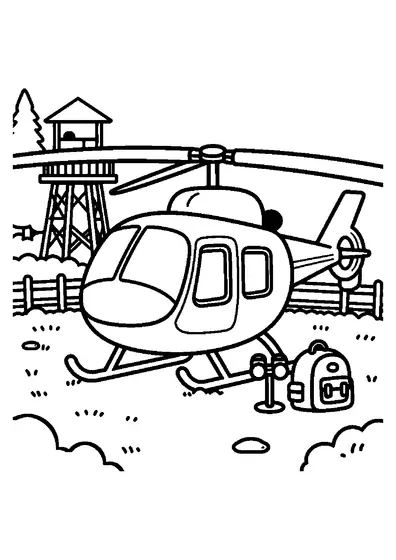
This scene features an Arctic scientific helicopter fitted with wide landing skids next to a polar research station dome on a glacier.

A4 format (landscape), black outlines on a white background · for home and classroom use
All coloring pages: Helicopter Coloring Pages
Similar coloring pages: Helicopter Coloring Pages



What else can you print? Free, no account needed
Custom Name Coloring Pages
Enter your child's name to generate a custom coloring page featuring large outline letters to color and decorate.
Open generator →Connect the Dots Generator
Eight connect-the-dots pictures across three difficulty levels. Features faint outline guides for younger children and dots only for older kids.
Open generator →Printables
Worksheets, tracing lines, mazes and dot-to-dots in A4.
Browse printables →
Arctic Research Helicopter at a Polar Base
Polar scientific expeditions rely on specialized aircraft designed to handle extreme environmental conditions. A polar research helicopter is parked on an icy glacier right beside the dome of a scientific station. The wide skids under the airframe distribute the weight of the aircraft across the snow and ice surface, keeping the heavy machine stable during ground operations in freezing regions.
Science Operations in Extreme Cold Environments
Polar research stations often use geodesic domes because their rounded structure withstands fierce Arctic winds and severe snowstorms better than flat walls. Helicopters operating in polar regions require anti-icing systems on rotor blades and engine air intakes to prevent dangerous ice accumulation while flying. Specialized aviation fuel is also used so that fluid lines do not freeze during long polar survey flights.
Real Colors of Polar Helicopters and Station Equipment
- Helicopter fuselage: bright red or vivid orange for high visibility against white snow
- Landing skids: dark gray or black steel
- Main rotor blades: matte black with high-visibility yellow tips
- Research station dome: white insulated panels or bright blue composite materials
- Glacier surface: pale blue, translucent turquoise, and pure white ice