
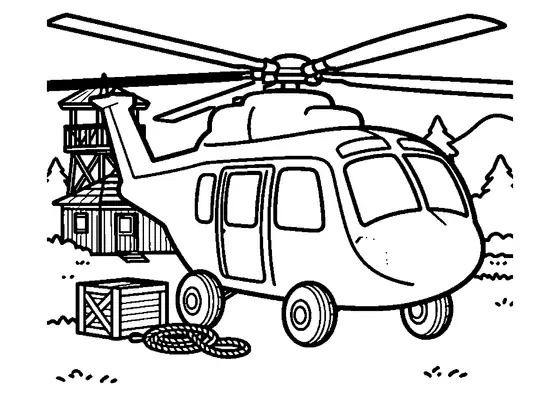
Helicopter Flying over Spring Meadow
An airborne rotorcraft hovers quietly above a patch of green grass on a bright spring afternoon.

A4 format (landscape), black outlines on a white background · for home and classroom use
All coloring pages: Helicopter Coloring Pages
Similar coloring pages: Helicopter Coloring Pages


What else can you print? Free, no account needed
Custom Name Coloring Pages
Enter your child's name to generate a custom coloring page featuring large outline letters to color and decorate.
Open generator →Connect the Dots Generator
Eight connect-the-dots pictures across three difficulty levels. Features faint outline guides for younger children and dots only for older kids.
Open generator →Printables
Worksheets, tracing lines, mazes and dot-to-dots in A4.
Browse printables →
Aircraft Hovering Above the Meadow
A helicopter glides smoothly in the air directly over a simple spring meadow. Its main rotor blades turn overhead while the cockpit and landing skids remain clearly positioned against the open sky.
Fascinating Facts About Helicopters
Unlike conventional airplanes, helicopters generate lift using rotating blades, allowing them to take off and land vertically without a runway. Their unique design enables them to hover motionless in one spot or fly backward and sideways with remarkable precision. Search and rescue teams often rely on these nimble aircraft to reach remote fields and difficult terrain.
Real Life Colors of Helicopters and Grass
- Helicopter fuselage: Often bright yellow, red, white, or navy blue depending on its emergency or civilian role
- Rotor blades: Matte black, dark gray, or silver metallic tones
- Cockpit windows: Clear glass reflecting subtle shades of sky blue
- Spring grass: Fresh vibrant green across the open field