
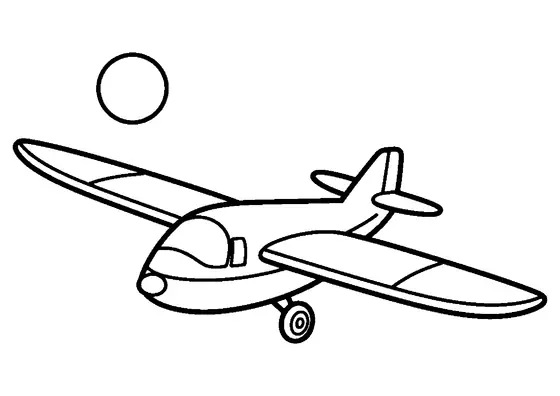
Helicopter Flying Above a Fluffy Cloud
Rotary-wing aircraft hover and maneuver effortlessly through open air to perform rescue operations and aerial transportation.

A4 format (portrait), black outlines on a white background · for home and classroom use
All coloring pages: Airplane Coloring Pages
Similar coloring pages: Airplane Coloring Pages



What else can you print? Free, no account needed
Custom Name Coloring Pages
Enter your child's name to generate a custom coloring page featuring large outline letters to color and decorate.
Open generator →Connect the Dots Generator
Eight connect-the-dots pictures across three difficulty levels. Features faint outline guides for younger children and dots only for older kids.
Open generator →Printables
Worksheets, tracing lines, mazes and dot-to-dots in A4.
Browse printables →
Rotary Aircraft Maneuvering Through the Sky
A helicopter features a prominent main rotor mounted on the cabin roof, wide glass windows, and landing wheels attached beneath the body. The machine hovers in an open sky setting.
How Helicopters Control Airborne Movement
Unlike fixed-wing airplanes, helicopters generate lift by spinning horizontal rotor blades at high speeds. By tilting the angle of these main blades, pilots can move forward, backward, sideways, or hover in one stationary position over the ground. This unique maneuvering capability allows rotary aircraft to land safely in small confined spaces without needing a long runway.
Real-World Colors of Rescue and Utility Helicopters
- Helicopter fuselage: bright yellow, emergency red, or white
- Rotor blades: dark charcoal gray or black
- Cabin windows: clear glass, light blue, or tinted black
- Landing wheels: black rubber with silver metallic hubs