
Smartwatch in a Watchmaker’s Workshop
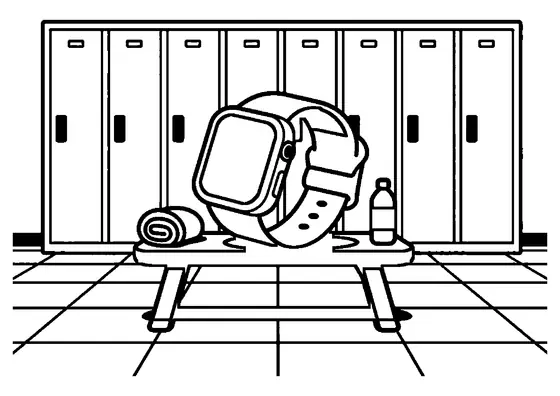
This page depicts a modern smartwatch surrounded by traditional clock gears on a table in a watchmaker's workshop.

A4 format (portrait), black outlines on a white background · for home and classroom use
All coloring pages: Phone Coloring Pages
Similar coloring pages: Phone Coloring Pages





What else can you print? Free, no account needed
Custom Name Coloring Pages
Enter your child's name to generate a custom coloring page featuring large outline letters to color and decorate.
Open generator →Connect the Dots Generator
Eight connect-the-dots pictures across three difficulty levels. Features faint outline guides for younger children and dots only for older kids.
Open generator →Printables
Worksheets, tracing lines, mazes and dot-to-dots in A4.
Browse printables →
Modern Electronics Inside a Traditional Watch Workshop
Placing a digital smartwatch on a worktable alongside mechanical gears highlights the evolution of timekeeping technology. A watchmaker's workshop serves as a specialized space where miniature gears, springs, and modern microchips come together under precise craftsmanship.
Historical Facts About Watchmaking and Micro-Gears
Traditional mechanical watches operate using mainsprings, escapements, and intricate brass gears to measure time without electronic batteries. Horology, the science of measuring time, transformed during the twentieth century as quartz crystals and digital microprocessors replaced mechanical pendulums. Master watchmakers use precision tweezers and magnifying loupes to assemble complex gear mechanisms on sturdy wooden workbench tables.
Real Colors of Watchmaker Tools and Watch Parts
- Modern smartwatch case: Matte black titanium, polished steel, or rose gold
- Mechanical gears: Shiny yellow brass, silver steel, or copper bronze
- Watchmaker worktable: Dark stained walnut, mahogany wood, or worn oak
- Smartwatch rubber strap: Midnight black, navy blue, or olive green