
Doll With a Stroller in a Dollhouse Courtyard
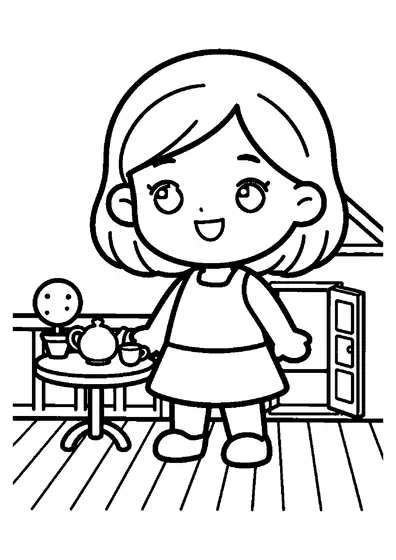
A miniature courtyard scene features a toy figure next to a small carriage and outdoor seating.

A4 format (landscape), black outlines on a white background · for home and classroom use
All coloring pages: Dollhouse Coloring Pages
Similar coloring pages: Dollhouse Coloring Pages




What else can you print? Free, no account needed
Custom Name Coloring Pages
Enter your child's name to generate a custom coloring page featuring large outline letters to color and decorate.
Open generator →Connect the Dots Generator
Eight connect-the-dots pictures across three difficulty levels. Features faint outline guides for younger children and dots only for older kids.
Open generator →Printables
Worksheets, tracing lines, mazes and dot-to-dots in A4.
Browse printables →
A Miniature Courtyard Setting
The scene captures a toy doll standing in a cobblestone courtyard of a miniature home. Beside the figure sits a stroller, accompanied by a small outdoor bench positioned along the paved courtyard ground. The architectural backdrop highlights the charm of dollhouse courtyard living.
Historic Miniature Architecture
Dollhouses originally emerged in sixteenth-century Europe as display cases for wealthy adults rather than playthings for children. Over time, craftspeople added paved courtyards and realistic mini furniture to recreate historic home settings in exact scale.
Real-Life Colors of Dollhouse Elements
- Wooden bench: Natural brown oak, weathered gray, or painted white
- Cobblestone paving: Shades of slate gray, tan, and muted charcoal
- Stroller frame: Polished chrome metal, pastel blue, or classic dark red fabric
- Dollhouse exterior walls: Warm cream, brick red, or soft yellow