
Doll’s dressing room with a freestanding wardrobe
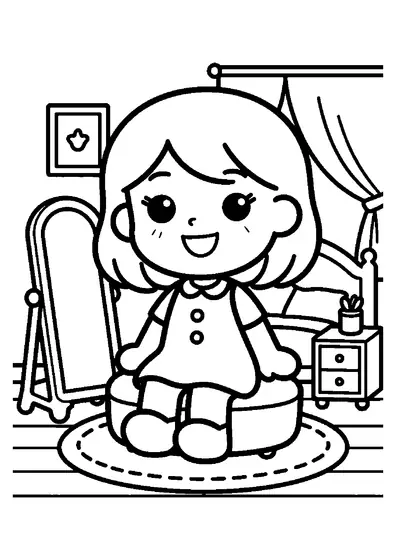
A doll stands inside a miniature dressing room arranged with a freestanding wooden wardrobe featuring a mirror and an open clothes rack.

A4 format (portrait), black outlines on a white background · for home and classroom use
All coloring pages: Dollhouse Coloring Pages
Similar coloring pages: Dollhouse Coloring Pages


What else can you print? Free, no account needed
Custom Name Coloring Pages
Enter your child's name to generate a custom coloring page featuring large outline letters to color and decorate.
Open generator →Connect the Dots Generator
Eight connect-the-dots pictures across three difficulty levels. Features faint outline guides for younger children and dots only for older kids.
Open generator →Printables
Worksheets, tracing lines, mazes and dot-to-dots in A4.
Browse printables →
Dollhouse Dressing Room with Storage Furniture
This interior arrangement features a doll inside a dedicated dressing room containing a large freestanding wooden wardrobe fitted with a built-in mirror. Positioned beside the wardrobe is an open clothes rack intended for organizing garments. Dressing rooms provide organized storage areas within residential houses, dedicated to clothing, shoes, and grooming accessories.
History of Standing Wardrobes and Mirrors
Before built-in wall closets became standard in modern housing, freestanding wooden armoires were essential for storing garments folded or hung on hooks. Adding full-length mirrors to wardrobe doors emerged in nineteenth-century Europe, combining clothing storage and personal grooming in one space. Metal and wooden clothes racks later allowed quick access to everyday outfits.
Realistic Colors of Wardrobe Accessories
- Wooden wardrobe exterior: polished oak, warm cherry, or painted white wood
- Wardrobe mirror glass: clear silvered mirror with subtle reflection
- Clothes rack frame: matte black metal, bronze, or natural timber
- Hanging doll garments: pastel pink, teal blue, or lavender cotton
- Dressing room floorboards: golden maple or light ash wood