
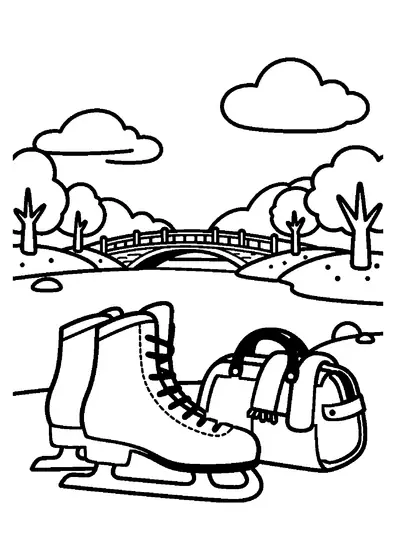
Ice Skates by a Frozen Pond
A winter scene features a pair of ice skates set beside a park bench next to a frozen pond surrounded by trees and snowdrifts.

A4 format (landscape), black outlines on a white background · for home and classroom use
All coloring pages: Winter Sports Coloring Pages
Similar coloring pages: Winter Sports Coloring Pages

What else can you print? Free, no account needed
Custom Name Coloring Pages
Enter your child's name to generate a custom coloring page featuring large outline letters to color and decorate.
Open generator →Connect the Dots Generator
Eight connect-the-dots pictures across three difficulty levels. Features faint outline guides for younger children and dots only for older kids.
Open generator →Printables
Worksheets, tracing lines, mazes and dot-to-dots in A4.
Browse printables →
Resting Ice Skates near a Park Pond
A pair of ice skates rests near a park bench along the edge of a frozen pond. Snowdrifts and trees frame the outdoor setting under floating clouds, capturing a calm winter day outdoors.
Winter Preparation for Natural Ice
Outdoor ponds freeze from the top down because ice is less dense than liquid water, creating a solid surface over colder water below. Skaters often inspect ice thickness carefully before stepping onto natural ponds, as temperatures must stay below freezing for several consecutive days to build a safe surface.
Real Colors of Ice Skating Gear and Outdoors
- Figure skate leather: Classic white or black, though modern casual skates can feature navy blue or red accents
- Metal skate blades: Shiny silver stainless steel with a polished chrome finish
- Park bench wood: Warm brown, dark mahogany, or painted forest green
- Winter pond ice: Soft light blue, translucent gray, or pale white
- Snowdrifts: Bright white with soft grayish-blue shadows in daylight