
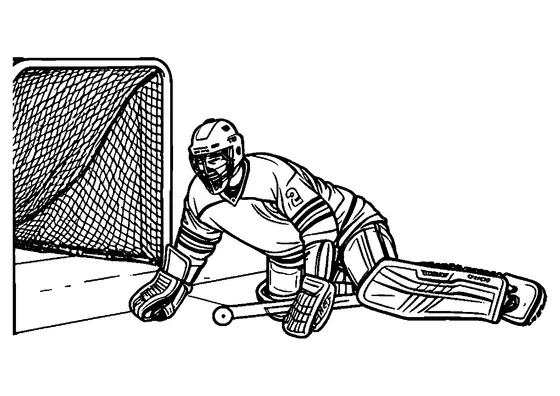
Ice Hockey Goalie Resting His Stick on the Ice
A fully equipped ice hockey goalie kneels in front of the net with a stick resting on the ice.

A4 format (portrait), black outlines on a white background · for home and classroom use
All coloring pages: Winter Sports Coloring Pages
Similar coloring pages: Winter Sports Coloring Pages




What else can you print? Free, no account needed
Custom Name Coloring Pages
Enter your child's name to generate a custom coloring page featuring large outline letters to color and decorate.
Open generator →Connect the Dots Generator
Eight connect-the-dots pictures across three difficulty levels. Features faint outline guides for younger children and dots only for older kids.
Open generator →Printables
Worksheets, tracing lines, mazes and dot-to-dots in A4.
Browse printables →
A goalie guarding the hockey net
The picture shows a helmeted goalie kneeling on the ice in full protective gear. The stick lies against the ice in front of the player, while part of the hockey goal and its netting can be seen on the left side of the rink.
How a goalie covers the lower net
Goalies often lower their bodies to block shots aimed near the ice. Their broad leg pads can cover much of the space close to the goal, while the stick helps stop or redirect low pucks. This position still allows the goalie to rise and move when play changes.
Realistic colors for the goalie and goal
- Goalie mask: white, black, or decorated in team colors
- Leg pads and gloves: white or a combination of team colors
- Goalie stick: natural wood tones, black, white, or a bright manufactured finish
- Goal frame: red
- Netting and ice: white netting with white or pale blue ice