
Adaptive Sit-Ski by a Mountain Lodge
Adaptive sit-skis enable individuals with physical disabilities to experience downhill sliding on snowy alpine slopes.

A4 format (portrait), black outlines on a white background · for home and classroom use
All coloring pages: Winter Sports Coloring Pages
Similar coloring pages: Winter Sports Coloring Pages
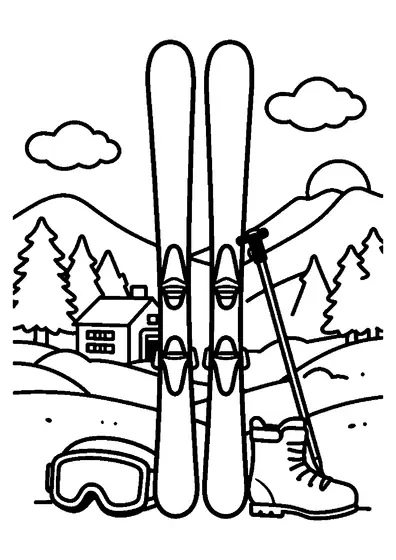


What else can you print? Free, no account needed
Custom Name Coloring Pages
Enter your child's name to generate a custom coloring page featuring large outline letters to color and decorate.
Open generator →Connect the Dots Generator
Eight connect-the-dots pictures across three difficulty levels. Features faint outline guides for younger children and dots only for older kids.
Open generator →Printables
Worksheets, tracing lines, mazes and dot-to-dots in A4.
Browse printables →
Adaptive Sit-Ski Equipment at a Winter Mountain Resort
An adaptive sit-ski stands displayed alongside a helmet and specialized outrigger poles in front of a spacious mountain lodge. Set against a calm winter backdrop, this setup highlights accessible equipment designed to open snow sports to athletes of all physical abilities. Mountain resorts utilize adaptive gear to provide safe, exciting winter experiences across snow-covered alpine terrain.
Key Information Regarding Adaptive Ski Technology
Sit-skis feature a custom-molded bucket seat mounted securely onto a steel or aluminum frame attached to one or two alpine skis. Athletes operate sit-skis using hand-held outrigger poles, which have small ski tips at the bottom to aid balance, steering, and stopping on snow. Adaptive winter sports programs exist at major mountain destinations worldwide, offering trained guides and specialized equipment for sit-skiers.
Colors of Adaptive Sit-Skis and Alpine Architecture
- Sit-ski frame: Glossy black, metallic silver, cobalt blue, or bright yellow powder coating
- Molded seat: Dark charcoal, navy blue, red, or black padded composite
- Outrigger poles: Lightweight aluminum silver with black rubber handgrips
- Mountain lodge: Natural log brown timber, stone gray masonry, and dark roofing tiles
- Helmet: High-visibility safety red, electric blue, or classic black