
Turning Beside a Low Ramp
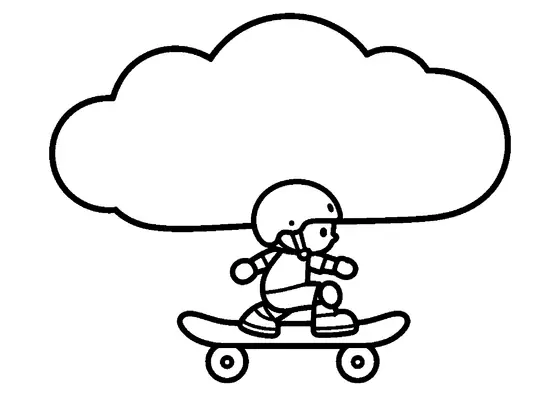
A skateboarder executes a gradual change of direction on a flat surface next to a low, rounded ramp.

A4 format (landscape), black outlines on a white background · for home and classroom use
All coloring pages: Sports Coloring Pages
Similar coloring pages: Sports Coloring Pages




What else can you print? Free, no account needed
Custom Name Coloring Pages
Enter your child's name to generate a custom coloring page featuring large outline letters to color and decorate.
Open generator →Connect the Dots Generator
Eight connect-the-dots pictures across three difficulty levels. Features faint outline guides for younger children and dots only for older kids.
Open generator →Printables
Worksheets, tracing lines, mazes and dot-to-dots in A4.
Browse printables →
Making a Turn Next to a Skatepark Ramp
A skateboarder performs a gentle turn across the flat area of a skatepark beside a low ramp with rounded edges. The movement focuses on shifting direction smoothly without riding directly onto the obstacle. The low ramp serves as a distinct structural feature along the side of the riding line.
How Skateboarders Change Direction on Flat Surfaces
Turning a skateboard on flat ground relies on leaning weight toward the heels or toes, which compresses the rubber bushings inside the metal trucks. This action tilts the deck and guides the wheels into a smooth curve, known as carving. Mastering simple turns on open flat pavement gives riders complete control before navigating tight spaces near park ramps.
Real Colors of Park Ground and Equipment
- Flat park pavement: Light gray smooth concrete or dark asphalt
- Low ramp edge: Silver metal coping pipe or painted red steel trim
- Skateboarder helmet: Bright orange, lime green, or dark black shell
- Skateboard deck bottom: Layered maple wood with customized graphic prints
- Skateboard wheels: Cream white, translucent blue, or bright yellow rubber