
Training Shuttlecock Side View
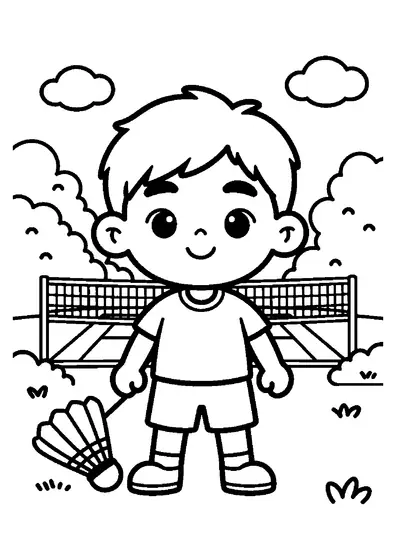
A side profile of a sports shuttlecock highlights the classic cork base and conical skirt used in badminton practice.

A4 format (landscape), black outlines on a white background · for home and classroom use
All coloring pages: Sports Coloring Pages
Similar coloring pages: Sports Coloring Pages


What else can you print? Free, no account needed
Custom Name Coloring Pages
Enter your child's name to generate a custom coloring page featuring large outline letters to color and decorate.
Open generator →Connect the Dots Generator
Eight connect-the-dots pictures across three difficulty levels. Features faint outline guides for younger children and dots only for older kids.
Open generator →Printables
Worksheets, tracing lines, mazes and dot-to-dots in A4.
Browse printables →
Training Shuttlecock in Badminton
Shuttlecocks are the primary projectile used in badminton and crossminton training sessions. Viewed from the side, the design displays a rounded cork tip attached to a wide conical skirt made from synthetic materials or natural feathers, engineered to stabilize rapidly in flight.
Aerodynamics of Badminton Shuttlecocks
When struck by a racket, a shuttlecock turns in midair so the heavy cork head always leads the flight path. The flared skirt creates drag, causing the shuttlecock to slow down predictably near the peak of its trajectory compared to a standard bouncing ball.
Real Colors of Training Shuttlecocks
- Shuttlecock base: natural light brown cork covered in thin white leather
- Base binding trim: thin red or dark green adhesive tape strip
- Feather skirt: bright white, neon yellow, or vibrant lime green
- Synthetic skirt ribs: white or translucent flexible plastic stem lines