
Skater on a Practice Course
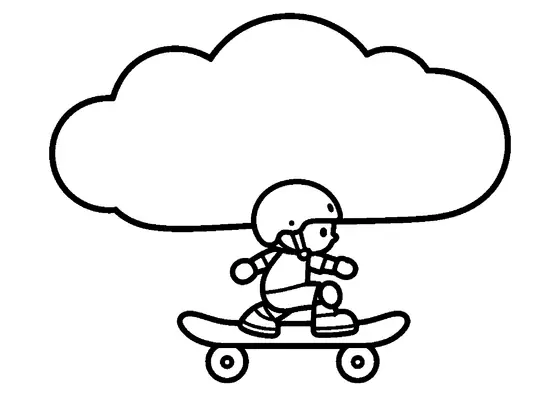
A fully geared skater navigates a flat practice area marked by a single traffic cone.

A4 format (landscape), black outlines on a white background · for home and classroom use
All coloring pages: Sports Coloring Pages
Similar coloring pages: Sports Coloring Pages



What else can you print? Free, no account needed
Custom Name Coloring Pages
Enter your child's name to generate a custom coloring page featuring large outline letters to color and decorate.
Open generator →Connect the Dots Generator
Eight connect-the-dots pictures across three difficulty levels. Features faint outline guides for younger children and dots only for older kids.
Open generator →Printables
Worksheets, tracing lines, mazes and dot-to-dots in A4.
Browse printables →
Riding on a Skate Practice Course
A skater wearing protective gear rides along a flat surface next to a prominent traffic cone. This setting represents a focused practice session where a rider navigates past a solitary training marker.
Real-World Skate Practice Routines
Skater practice sessions often utilize simple markers like safety cones to map out steering paths and turning radiuses. Protective gear including knee pads, elbow pads, wrist guards, and helmets reduces injury risks while learning balance techniques. Practicing on smooth, flat surfaces allows riders to master control before attempting complex tricks or steep inclines.
Realistic Colors of Skate Gear and Practice Cones
- Traffic cone: bright orange or red with reflective white horizontal stripes
- Wrist guards: black or dark gray hard synthetic plates with nylon straps
- Knee and elbow pads: heavy dark fabric with hard white or black molded plastic caps
- Practice surface: dark gray asphalt or light gray polished concrete