
Preschooler Learning Basketball
Young children introduced to basketball often start by getting familiar with the size and bounce of the ball.

A4 format (portrait), black outlines on a white background · for home and classroom use
All coloring pages: Sports Coloring Pages
Similar coloring pages: Sports Coloring Pages



What else can you print? Free, no account needed
Custom Name Coloring Pages
Enter your child's name to generate a custom coloring page featuring large outline letters to color and decorate.
Open generator →Connect the Dots Generator
Eight connect-the-dots pictures across three difficulty levels. Features faint outline guides for younger children and dots only for older kids.
Open generator →Printables
Worksheets, tracing lines, mazes and dot-to-dots in A4.
Browse printables →
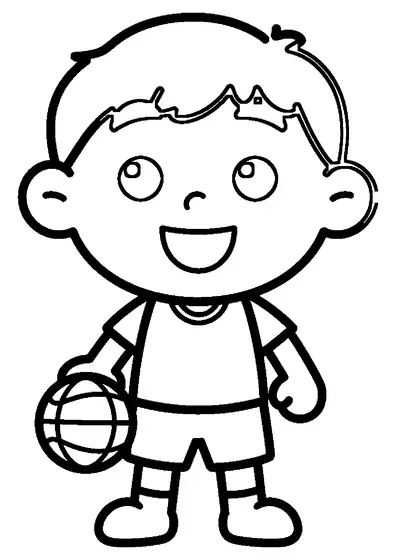
Young Toddler with a Basketball
Early sports activities for preschoolers focus on basic motor skills, such as holding, rolling, and bouncing a ball. A young child standing next to a sports ball represents the initial step in learning how team sports work. Equipment designed for younger players usually features lighter materials to make handling easier during practice sessions.
Fun Facts About Basketball
Basketball was invented in 1891 by James Naismith, who originally used peach baskets as goals. Early basketballs were actually brown, and the iconic bright orange color was introduced in the late 1950s to make the ball more visible to players and spectators. Preschoolers often play with smaller balls made specifically for smaller hands.
Real Colors of Basketball Equipment
- Basketball: classic bright orange with black lines, though training balls can be blue or red
- Athletic shirt: solid colors like red, navy blue, or green
- Athletic shorts: matching or contrasting neutral shades like white, gray, or black
- Basketball shoes: white leather or synthetic fabric with colorful rubber soles