
Canoe Paddle with Wide Blade
A traditional single-blade canoe paddle features a wide rounded blade connected to a top T-shaped grip handle.

A4 format (portrait), black outlines on a white background · for home and classroom use
All coloring pages: Sports Coloring Pages
Similar coloring pages: Sports Coloring Pages


What else can you print? Free, no account needed
Custom Name Coloring Pages
Enter your child's name to generate a custom coloring page featuring large outline letters to color and decorate.
Open generator →Connect the Dots Generator
Eight connect-the-dots pictures across three difficulty levels. Features faint outline guides for younger children and dots only for older kids.
Open generator →Printables
Worksheets, tracing lines, mazes and dot-to-dots in A4.
Browse printables →
Single-Blade Canoe Paddle
A canoe paddle is an essential piece of watercraft gear featuring a single rounded blade, a straight shaft, and a specialized T-handle at the top. The operator places one hand on the handle grip and the other along the shaft to push through the water.
Facts About Canoeing Gear
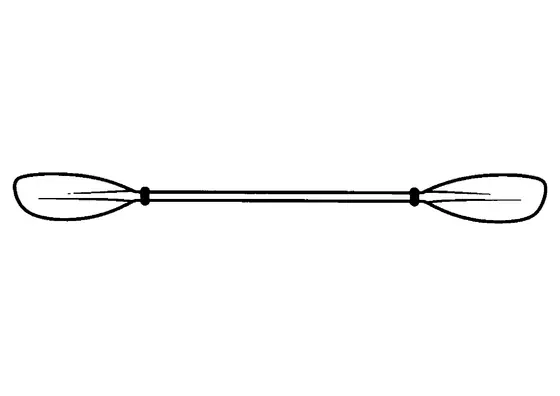
Unlike double-bladed kayak paddles, canoe paddles feature only one blade and require the rower to switch sides periodically to maintain a straight path. Traditional wooden designs rely on varnished hardwood layers to prevent water absorption and rotting. The T-handle design gives the paddler maximum leverage and control when executing precise steering strokes.
Authentic Colors of a Canoe Paddle
- Paddle blade: natural wood grain, dark ash brown, or painted yellow
- Paddle shaft: polished varnish brown or silver aluminum
- T-handle grip: smooth timber brown or molded black composite