
Rocket Over Crater Lake
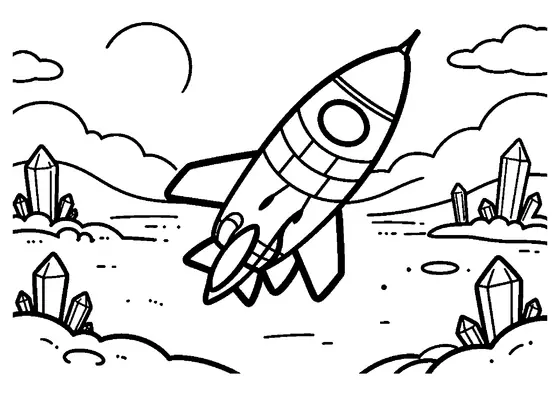
A large spacecraft hovers above a calm body of water enclosed within a massive volcanic crater.

A4 format (landscape), black outlines on a white background · for home and classroom use
All coloring pages: Space and Rocket Coloring Pages
Similar coloring pages: Space and Rocket Coloring Pages




What else can you print? Free, no account needed
Custom Name Coloring Pages
Enter your child's name to generate a custom coloring page featuring large outline letters to color and decorate.
Open generator →Connect the Dots Generator
Eight connect-the-dots pictures across three difficulty levels. Features faint outline guides for younger children and dots only for older kids.
Open generator →Printables
Worksheets, tracing lines, mazes and dot-to-dots in A4.
Browse printables →
Spacecraft Hovering Above a Volcanic Crater Lake
The scene presents a high-tech spacecraft suspended over a tranquil lake inside a crater. Steep volcanic rocks and rounded hills encircle the water, forming a natural basin beneath the vehicle. This environment brings together geological features formed by ancient volcanic activity and advanced aeronautical flight.
Real Volcanic Crater Lakes in Nature
Crater lakes form when rainwater or groundwater fills a caldera left behind by a collapsed volcano. Because these lakes often have no river inlets or outlets, their water is exceptionally clear and rich in dissolved minerals. Some volcanic crater lakes stay warm year-round due to geothermal heat radiating from deep underground.
Realistic Colors of Craters and Water
- rocket exterior: heat-resistant white or light gray alloy
- crater lake: intense sapphire blue or turquoise water
- volcanic rocks: charcoal gray, dark basalt, or reddish iron soil
- surrounding hills: pale green vegetation or dry tan earth