
Lander Module at a Planetary Research Base
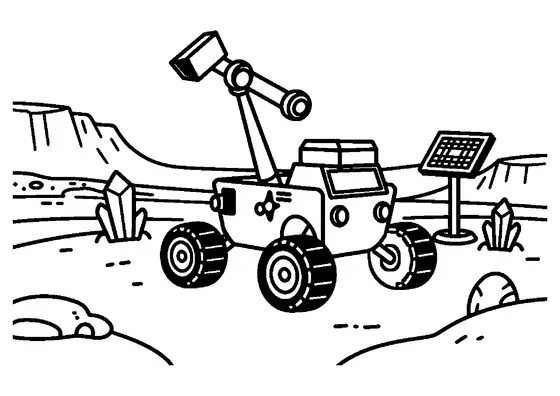
This coloring page shows a space lander at a planetary research base, with rugged terrain, mountains, and a research habitat nearby.

A4 format (portrait), black outlines on a white background · for home and classroom use
All coloring pages: Space and Rocket Coloring Pages
Similar coloring pages: Space and Rocket Coloring Pages



What else can you print? Free, no account needed
Custom Name Coloring Pages
Enter your child's name to generate a custom coloring page featuring large outline letters to color and decorate.
Open generator →Connect the Dots Generator
Eight connect-the-dots pictures across three difficulty levels. Features faint outline guides for younger children and dots only for older kids.
Open generator →Printables
Worksheets, tracing lines, mazes and dot-to-dots in A4.
Browse printables →
What the lander module and planetary research base show
The space lander rests on support legs in rugged terrain. Mountains and a research habitat form the setting of the planetary base, suggesting a place where explorers could arrive, work, and study the surrounding world.
Facts about landing and research on other worlds
A lander uses its support legs to remain stable after reaching the surface of a planet or moon. Research habitats are designed to protect crews and scientific equipment from conditions such as extreme temperatures, dust, and thin or absent atmospheres. Rugged ground can make selecting a safe landing area especially important.
Real-life colors of a planetary lander
- Lander body: commonly white, silver, gold, or metallic gray
- Support legs: often silver, white, or dark gray
- Research habitat: commonly white or light gray, sometimes with colored markings
- Mountains and rugged terrain: brown, rust, tan, charcoal, or gray depending on the world
- Windows and viewing panels: dark blue, black, or reflective gray