
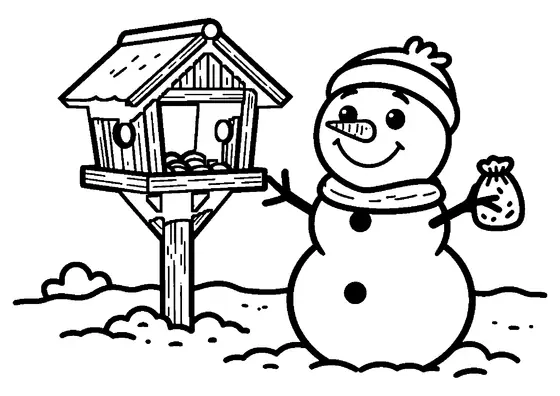
Snowman Outside a Historic Village Ice House
A snow figure stands beside a wooden crate near a thick stone ice house built to store winter ice blocks.

A4 format (portrait), black outlines on a white background · for home and classroom use
All coloring pages: Snowman Coloring Pages
Similar coloring pages: Snowman Coloring Pages




What else can you print? Free, no account needed
Custom Name Coloring Pages
Enter your child's name to generate a custom coloring page featuring large outline letters to color and decorate.
Open generator →Connect the Dots Generator
Eight connect-the-dots pictures across three difficulty levels. Features faint outline guides for younger children and dots only for older kids.
Open generator →Printables
Worksheets, tracing lines, mazes and dot-to-dots in A4.
Browse printables →
A Snowman by the Village Ice House
A snowman rests outside a traditional stone ice house accompanied by a sturdy wooden crate. Before modern refrigeration existed, communities relied on these specialized insulated buildings to preserve harvested ice throughout warm summer months.
How Traditional Ice Houses Kept Cold
Ice houses were engineered with underground pits, extremely thick masonry walls, and shaded roofs to prevent heat transfer. During winter months, workers cut thick ice blocks from frozen lakes and stacked them inside packed tightly with insulating straw or sawdust. This natural insulation preserved ice for months, supplying households and food merchants well into late summer.
Realistic Colors of Historical Ice Houses
- Snowman: Pure white packed snow
- Ice house stone masonry: Weathered gray or muted tan stone
- Wooden crate: Natural timber brown
- Heavy wooden access door: Dark oak or rust brown
- Roof tiles or thatch: Charcoal gray or dry straw yellow