
Snowman on a Riverside Promenade
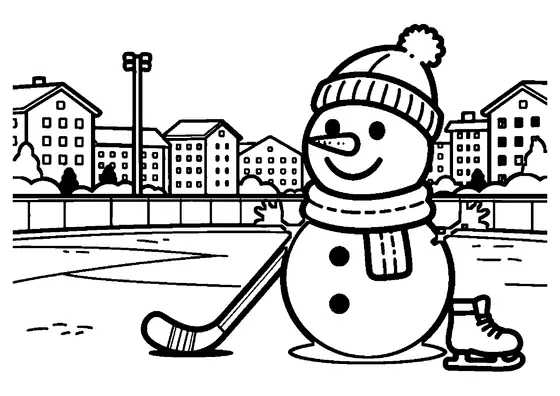
A snowman wearing a pom-pom hat rests beside a bench along a winter promenade overlooking a calm river.

A4 format (landscape), black outlines on a white background · for home and classroom use
All coloring pages: Snowman Coloring Pages
Similar coloring pages: Snowman Coloring Pages


What else can you print? Free, no account needed
Custom Name Coloring Pages
Enter your child's name to generate a custom coloring page featuring large outline letters to color and decorate.
Open generator →Connect the Dots Generator
Eight connect-the-dots pictures across three difficulty levels. Features faint outline guides for younger children and dots only for older kids.
Open generator →Printables
Worksheets, tracing lines, mazes and dot-to-dots in A4.
Browse printables →
Snowman Along the Riverside Promenade
A winter promenade overlooking a river features a snowman wearing a pom-pom hat standing next to a bench. The paved walkway stretches alongside the water, creating a peaceful riverside setting during the colder months.
Interesting Facts About Rivers in Winter
Rivers rarely freeze completely solid because moving water creates constant movement that hinders ice formation. Ice usually forms first along slow-moving riverbanks and edges, while the central current continues flowing beneath a frozen crust.
Natural Colors of a Riverside Promenade
- Snowman body: white packed snow
- Pom-pom hat: red and navy blue knitted yarn
- Park bench: dark brown wood with black iron legs
- Promenade walkway: gray stone paving
- River water: deep blue with icy white patches