
Snowman in a Country Wheelwright’s Yard
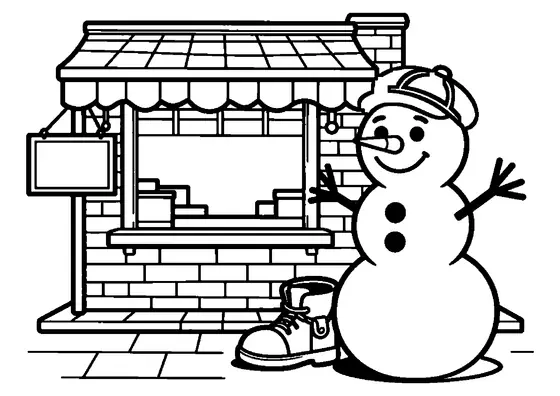
A snowman stands in a rural wheelwright's yard alongside large wooden wagon wheels outside the artisan workshop.

A4 format (portrait), black outlines on a white background · for home and classroom use
All coloring pages: Snowman Coloring Pages
Similar coloring pages: Snowman Coloring Pages




What else can you print? Free, no account needed
Custom Name Coloring Pages
Enter your child's name to generate a custom coloring page featuring large outline letters to color and decorate.
Open generator →Connect the Dots Generator
Eight connect-the-dots pictures across three difficulty levels. Features faint outline guides for younger children and dots only for older kids.
Open generator →Printables
Worksheets, tracing lines, mazes and dot-to-dots in A4.
Browse printables →
A Snowman in the Wheelwright's Workshop Yard
A snowman features in a historical workshop yard, positioned beside large wooden wagon wheels outside a traditional wheelwright's craft shop. The setting reflects an authentic rural trade yard dedicated to constructing heavy wooden transport wheels.
The Engineering of Traditional Wagon Wheels
Wheelwrights crafted wagon wheels by carefully combining dense wooden spokes, a central hub, and curved outer wooden segments called felloes. To make wheels durable enough for bumpy roads, smiths shrank a red-hot iron tire ring around the wooden rim, locking all pieces tightly together as the metal cooled.
True-to-Life Colors of a Wheelwright's Yard
- Snowman figure: bright white snow accented with dark stone details
- Wagon wheel timber: natural hickory, elm, or oak wood tones
- Metal wheel tire rim: dark forged iron, rusty steel gray, or charcoal black
- Workshop building facade: rustic timber planks or aged whitewashed plaster
- Yard ground: packed earth, light snow cover, and pale wood shavings