
Snowman by a Frozen Pond
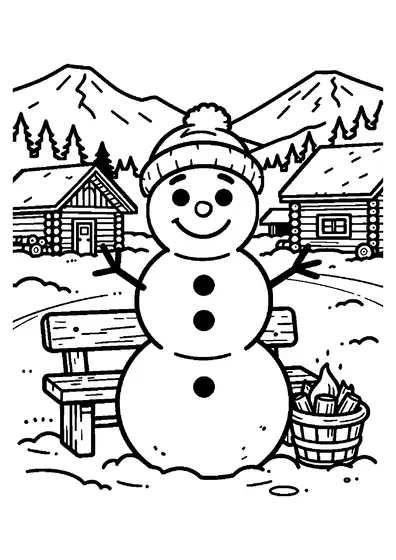
A beret-wearing snowman stands along the edge of a frozen pond near a sled, surrounded by dried shoreline reeds and a wooden dock.

A4 format (landscape), black outlines on a white background · for home and classroom use
All coloring pages: Snowman Coloring Pages
Similar coloring pages: Snowman Coloring Pages




What else can you print? Free, no account needed
Custom Name Coloring Pages
Enter your child's name to generate a custom coloring page featuring large outline letters to color and decorate.
Open generator →Connect the Dots Generator
Eight connect-the-dots pictures across three difficulty levels. Features faint outline guides for younger children and dots only for older kids.
Open generator →Printables
Worksheets, tracing lines, mazes and dot-to-dots in A4.
Browse printables →
A Winter Pond Scene with a Snowman and Sled
Freezing temperatures transform quiet bodies of water into smooth icy surfaces lined with dormant shoreline foliage. Near the water's edge, a snowman wearing a stylish beret rests next to a wooden sled, with tall reeds and a lakeside dock standing nearby.
Interesting Facts About Frozen Ponds and Reeds
Ponds freeze from the surface downward because water reaches its maximum density at 39 degrees Fahrenheit, letting lighter, colder water float to the top to turn into ice. Aquatic reeds dry out into hollow, golden-brown stalks during winter while their root systems survive underneath the frozen bank. Wooden docks expand and contract slightly in freezing weather without losing structural stability.
Natural Colors Around a Frozen Pond
- Beret cap: french navy blue, burgundy red, or forest green
- Wooden sled frame: warm honey oak, reddish mahogany, or unpainted ash wood
- Shoreline reeds: pale golden tan, buff brown, or straw yellow
- Frozen pond ice: pale icy blue, translucent white, or bluish gray