
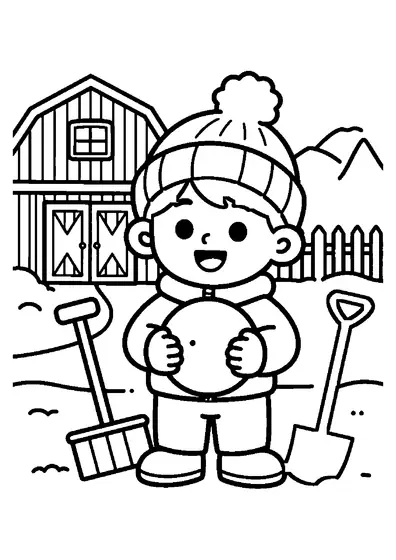
Girl Throwing a Snowball Beside a Snowy Fence
Standing near a snow-draped country fence, a child prepares to throw a freshly packed snowball during outdoor play.

A4 format (portrait), black outlines on a white background · for home and classroom use
All coloring pages: Winter Coloring Pages
Similar coloring pages: Winter Coloring Pages



What else can you print? Free, no account needed
Custom Name Coloring Pages
Enter your child's name to generate a custom coloring page featuring large outline letters to color and decorate.
Open generator →Connect the Dots Generator
Eight connect-the-dots pictures across three difficulty levels. Features faint outline guides for younger children and dots only for older kids.
Open generator →Printables
Worksheets, tracing lines, mazes and dot-to-dots in A4.
Browse printables →
Outdoor Play Beside a Country Fence
Playing in winter snow near a rustic country fence offers an open setting for seasonal games and snowball throwing. Wearing an insulated winter jacket keeps cold air out during active movement in fresh outdoor snowfall. Fences in rural environments help define boundaries and often catch drifting snow along their wooden rails.
Physics and Formation of Snowballs
Forming a snowball requires compressing loose snow crystals between gloved hands so friction creates mild surface melting. As pressure releases, the moisture refreezes instantly, bonding the individual ice grains into a solid sphere. Snow that is too cold will crumble, while wet snow forms heavy, dense spheres that pack together effortlessly.
Colors of Winter Clothing and Country Fences
- Country fence rails: rustic brown oak or weathered gray cedar
- Winter jacket: vibrant red, teal, or bright purple
- Packed snowball: pure white with soft shadowed highlights
- Snow layer on fence tops: soft white cap with icy glitter