
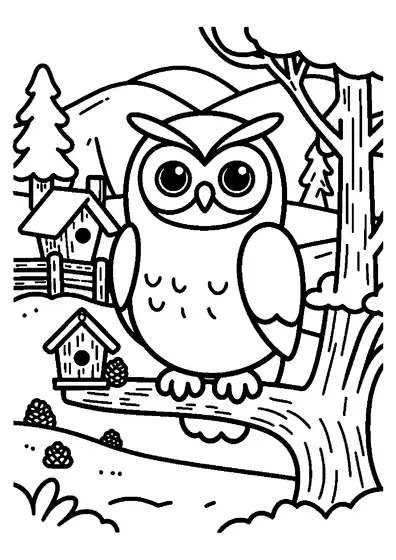
Capercaillie on a Snowy Log in a Dense Forest
The Western capercaillie is a large woodland grouse native to old-growth pine forests across northern regions.

A4 format (portrait), black outlines on a white background · for home and classroom use
All coloring pages: Winter Coloring Pages
Similar coloring pages: Winter Coloring Pages




What else can you print? Free, no account needed
Custom Name Coloring Pages
Enter your child's name to generate a custom coloring page featuring large outline letters to color and decorate.
Open generator →Connect the Dots Generator
Eight connect-the-dots pictures across three difficulty levels. Features faint outline guides for younger children and dots only for older kids.
Open generator →Printables
Worksheets, tracing lines, mazes and dot-to-dots in A4.
Browse printables →
The Capercaillie in Snowy Conifer Forests
Perched on fallen tree trunks, the male capercaillie displays dark plumage and a fan-shaped tail feather structure. Dense coniferous forests provide essential shelter and food sources during harsh winter months. Fallen logs covered in snowpack serve as territorial vantage points for forest birds scanning surrounding trees.
Habitat and Adaptations of the Western Capercaillie
Capercaillies adapt to cold winters by feeding primarily on tough conifer needles, particularly Scots pine needles, when ground food is buried under snow. Specialized comb-like fringe structures on their toes, called pectinations, grow during winter to function like snowshoes, helping birds walk across soft snow drifts. These large birds prefer secluded, undisturbed pine woodlands with ancient trees for roosting.
Real Colors of the Forest Capercaillie
- Male capercaillie body: Dark charcoal gray and metallic black feathers with a metallic green chest sheen
- Wing coverts: Rich chestnut brown feathers along upper wing areas
- Eye patch: Bright scarlet red bare skin patch located above each eye
- Fallen tree trunk: Weathered bark in dark brown or gray tones partially covered in white snow
- Conifer foliage: Evergreen pine and spruce needles remain deep forest green year-round