
Arctic Wolf on a Snowy Rocky Hill
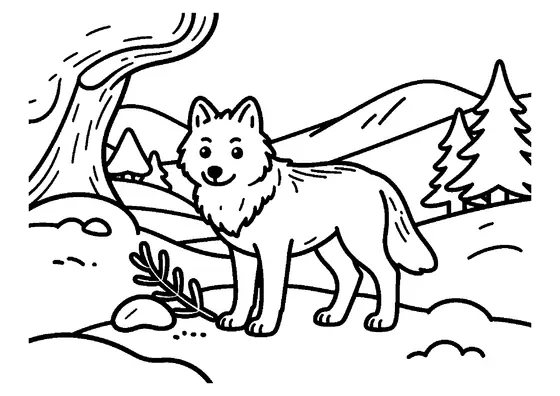
This wilderness portrait displays a thick-coated Arctic wolf standing on a rugged rocky hill surrounded by snow.

A4 format (landscape), black outlines on a white background · for home and classroom use
All coloring pages: Winter Coloring Pages
Similar coloring pages: Winter Coloring Pages

What else can you print? Free, no account needed
Custom Name Coloring Pages
Enter your child's name to generate a custom coloring page featuring large outline letters to color and decorate.
Open generator →Connect the Dots Generator
Eight connect-the-dots pictures across three difficulty levels. Features faint outline guides for younger children and dots only for older kids.
Open generator →Printables
Worksheets, tracing lines, mazes and dot-to-dots in A4.
Browse printables →
Arctic Wolf Atop a Frozen Rocky Hill
A thick-furred Arctic wolf stands alert on a snow-draped rocky slope in a remote northern wilderness setting. Arctic wolves inhabit some of the most unforgiving frozen environments on Earth, where temperatures drop far below freezing. Standing on elevated vantage points allows the pack leader to survey vast distances across snowy valleys.
Adaptations of the Northern Arctic Wolf
Arctic wolves are slightly smaller than gray wolves, featuring shorter ears and shorter muzzles to minimize heat loss in freezing winds. Their thick double-layered pelt insulates them so effectively that they can withstand extreme arctic cold without shivering. Unlike many wolves that face human intrusion, Arctic wolves live in remote frozen regions where their wild habits remain preserved.
Colors of the Arctic Wolf Landscape
- Arctic wolf fur: Brilliant off-white, light cream, or silver-gray pelt
- Wolf eyes: Amber, gold, or piercing dark hazel
- Wolf nose and lips: Deep charcoal black
- Rocky hill terrain: Dark gray granite, brown stone, and weathered rock
- Surrounding landscape: Bright white snow drifts and cool shadow tones