
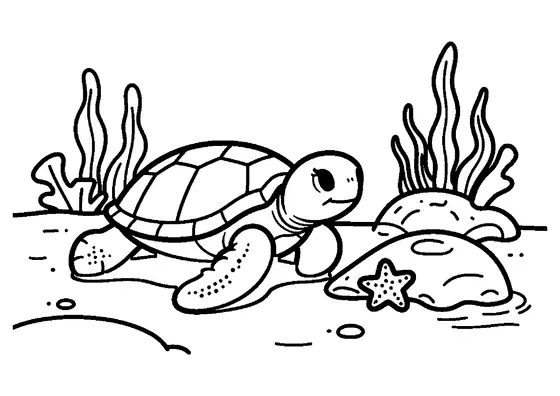
Sea Turtle Swimming Over a Coral Reef
Tropical coral reefs support diverse marine life including sea turtles drifting above colorful underwater habitats.

A4 format (landscape), black outlines on a white background · for home and classroom use
All coloring pages: Summer Coloring Pages
Similar coloring pages: Summer Coloring Pages


What else can you print? Free, no account needed
Custom Name Coloring Pages
Enter your child's name to generate a custom coloring page featuring large outline letters to color and decorate.
Open generator →Connect the Dots Generator
Eight connect-the-dots pictures across three difficulty levels. Features faint outline guides for younger children and dots only for older kids.
Open generator →Printables
Worksheets, tracing lines, mazes and dot-to-dots in A4.
Browse printables →
A Sea Turtle Gliding Over Coral Formations
A large sea turtle swims steadily through clear ocean water directly above a vibrant reef. Clusters of sea anemones rest along the coral rocks below the marine creature.
Underwater Ecosystems of the Ocean
Sea turtles use their long paddle-shaped flippers to navigate strong ocean currents with remarkable grace. Coral reefs are built by millions of tiny organisms that create hard calcium carbonate structures over hundreds of years. Sea anemones form symbiotic relationships with small ocean creatures that shelter among their soft stinging tentacles.
Authentic Colors of Reef Marine Life
- Sea turtle shell: Olive brown with yellow patterns
- Sea turtle skin: Muted greenish gray
- Coral formations: Bright pink, orange, and purple
- Sea anemones: Pastel pink or light green