
Woodpecker in an Autumn Birch Grove
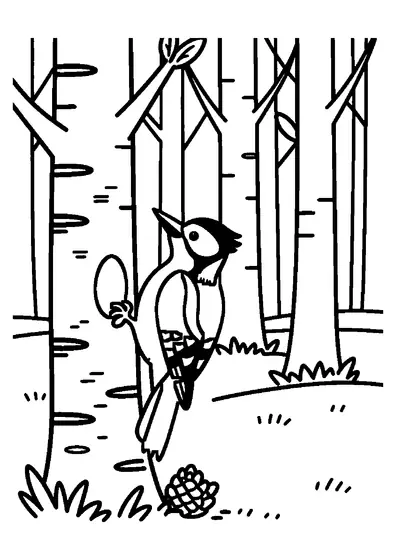
A hardworking woodpecker clings to white birch bark surrounded by fallen autumn leaves, pinecones, and forest paths.

A4 format (portrait), black outlines on a white background · for home and classroom use
All coloring pages: Fall Coloring Pages
Similar coloring pages: Fall Coloring Pages


What else can you print? Free, no account needed
Custom Name Coloring Pages
Enter your child's name to generate a custom coloring page featuring large outline letters to color and decorate.
Open generator →Connect the Dots Generator
Eight connect-the-dots pictures across three difficulty levels. Features faint outline guides for younger children and dots only for older kids.
Open generator →Printables
Worksheets, tracing lines, mazes and dot-to-dots in A4.
Browse printables →
Woodpecker in the Birch Forest
The scene shows a forest woodpecker positioned on a tall birch tree trunk inside a quiet autumn nature reserve. Below the tree, a pinecone and a broad fallen leaf lie near a winding woodland path, with dense treetops and a wooden sign visible nearby.
Unique Characteristics of Birch Trees and Woodpeckers
Birch trees are easily recognized by their papery white bark, which peels in natural layers to protect the trunk during cold autumn months. Woodpeckers possess specialized skull structures and shock-absorbing tissues that protect their brains while pecking into hard tree bark.
Real-Life Colors of the Scene
- Woodpecker plumage: black and white pattern with a vibrant red patch on the head or tail
- Birch trunk: chalky white bark with dark gray horizontal dashes and black knots
- Fallen autumn leaf: bright yellow, amber, or deep golden orange
- Pinecone: woody medium brown with lighter tan scale edges
- Woodland path: damp reddish brown soil mixed with fallen pine needles