
Young Explorer with a Basket of Birch Boletes
A young mushroom collector wearing a hooded jacket stands in a woodland clearing holding a walking stick and a basket of birch boletes.

A4 format (portrait), black outlines on a white background · for home and classroom use
All coloring pages: Mushroom Coloring Pages
Similar coloring pages: Mushroom Coloring Pages
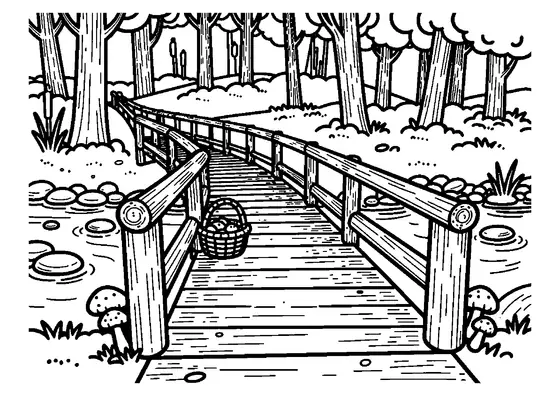
Wooden Forest Footbridge with Honey Fungus
Boy Resting on a Log with a Basket of Chanterelles
Forest Ranger’s ATV with Birch Boletes on a Trail
Young Mushroom Picker with a Basket in a Birch Grove
Forest Shelter with Mushroom Drying Racks
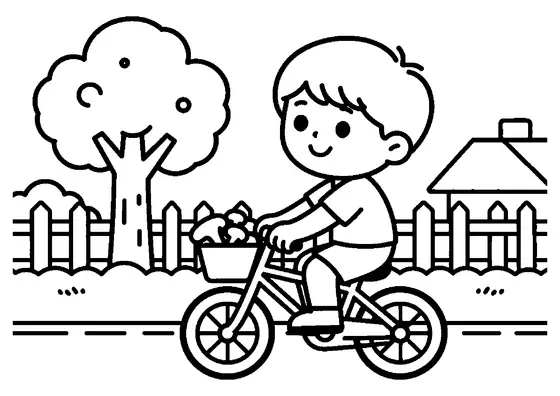
Boy Riding a Bike with a Basket of Chanterelles by a Country Fence


What else can you print? Free, no account needed
Custom Name Coloring Pages
Enter your child's name to generate a custom coloring page featuring large outline letters to color and decorate.
Open generator →Connect the Dots Generator
Eight connect-the-dots pictures across three difficulty levels. Features faint outline guides for younger children and dots only for older kids.
Open generator →Printables
Worksheets, tracing lines, mazes and dot-to-dots in A4.
Browse printables →
Young Mushroom Forager in a Birch Forest Clearing
This scene depicts a young boy dressed in a hooded jacket standing in a forest clearing at the edge of a birch wood. He holds a sturdy walking stick in one hand and carries a basket filled with collected birch bolete mushrooms.
Intriguing Facts About Birch Boletes and Forest Foraging
Birch boletes are wild edible mushrooms that grow exclusively near birch trees throughout temperate regions. The stem of a birch bolete is covered with characteristic small dark scales that resemble coarse scabrous bumps. Traditional foragers rely on walking sticks to push aside leaf litter gently when searching for mushrooms under tree canopies.
Natural Colors of Birch Boletes and Outdoor Gear
- Birch bolete cap: grayish-brown, warm chestnut brown, or yellowish-tan
- Birch bolete stem: off-white or light gray with small black or dark brown scales
- Birch bolete pores: pale white turning grayish-tan on older mushrooms
- Forager hooded jacket: forest green, mustard yellow, or rust brown outdoor fabric
- Wooden walking stick: natural dark brown hickory or peeled tan willow branch
- Wicker basket: golden straw, pale tan, or light chestnut woven reed