
Alpine Ibex Beside a Porcini Mushroom
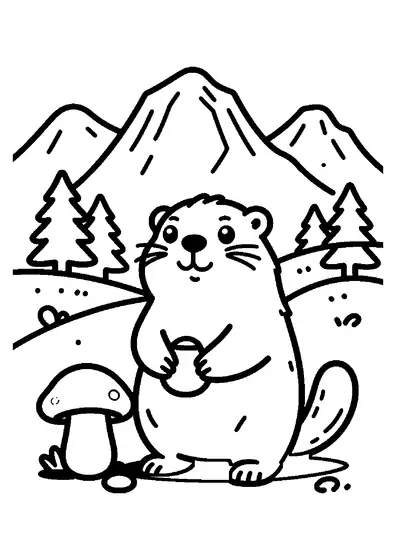
An Alpine ibex stands on a steep mountain ledge near a wild porcini mushroom growing among rocks.

A4 format (portrait), black outlines on a white background · for home and classroom use
All coloring pages: Mushroom Coloring Pages
Similar coloring pages: Mushroom Coloring Pages



What else can you print? Free, no account needed
Custom Name Coloring Pages
Enter your child's name to generate a custom coloring page featuring large outline letters to color and decorate.
Open generator →Connect the Dots Generator
Eight connect-the-dots pictures across three difficulty levels. Features faint outline guides for younger children and dots only for older kids.
Open generator →Printables
Worksheets, tracing lines, mazes and dot-to-dots in A4.
Browse printables →
Alpine Ibex and Porcini Mushroom on a Mountain Ledge
High above the tree line, an Alpine ibex rests on a rugged mountain ledge surrounded by rocks. A wild porcini mushroom grows directly out of the stony ground near the animal, set against a distant mountain backdrop.
Fascinating Facts About High-Altitude Wildlife
Alpine ibex are skilled climbers that comfortably navigate steep, rocky terrain where few other large mammals survive. While wild mushrooms usually prefer rich forest soil, certain species can sprout near mountain paths where moisture collects under shaded rocks. These hardy mammals spend their summers high in the mountains and move to lower slopes when winter snow covers their grazing areas.
Natural Colors of the Ibex and Porcini
- Alpine ibex coat: brownish-gray in summer, turning darker brown during winter months
- Ibex horns: dark gray or brownish-black with pronounced ridges
- Porcini mushroom cap: reddish-brown to dark chestnut brown
- Porcini mushroom stalk: pale cream or light beige with a solid structure
- Mountain rocks: slate gray, tan, and weathered granite tones