
Owl on an Oak Branch by an Old Bell Tower
An owl resting on an oak branch near a historic bell tower brings a calm autumn scene to life.

A4 format (portrait), black outlines on a white background · for home and classroom use
All coloring pages: Fall Leaves and Chestnuts Coloring Pages
Similar coloring pages: Fall Leaves and Chestnuts Coloring Pages




What else can you print? Free, no account needed
Custom Name Coloring Pages
Enter your child's name to generate a custom coloring page featuring large outline letters to color and decorate.
Open generator →Connect the Dots Generator
Eight connect-the-dots pictures across three difficulty levels. Features faint outline guides for younger children and dots only for older kids.
Open generator →Printables
Worksheets, tracing lines, mazes and dot-to-dots in A4.
Browse printables →
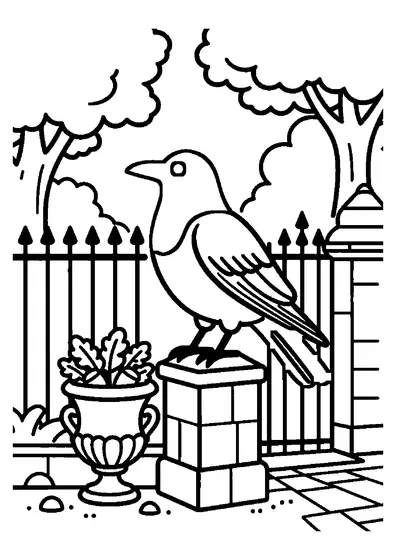
Heart-Faced Owl and Oak Branch in an Autumn Setting
This illustration highlights an owl with a heart-shaped face positioned on a large oak branch. Next to the bird, a cluster of acorns and autumn oak leaves decorate the tree. In the background, the subtle presence of an old bell tower creates a peaceful woodland atmosphere.
Interesting Facts About Owls and Oak Trees
Barn owls are famous for their heart-shaped facial discs, which help channel faint sounds directly to their ears while hunting at night. Oak trees growing near historic stone structures often produce acorns that serve as a vital food source for forest wildlife during the fall season.
Natural Colors of Owls and Oak Branches
- Owl feathers: Pale cream, golden brown, and white with dark speckles
- Owl eyes: Dark brown or deep black
- Oak leaves: Golden yellow, deep orange, and rusty brown
- Acorns: Light tan with dark brown caps
- Bell tower stone: Natural gray, beige, and weathered brown