
Large Leaf in a Forest Clearing
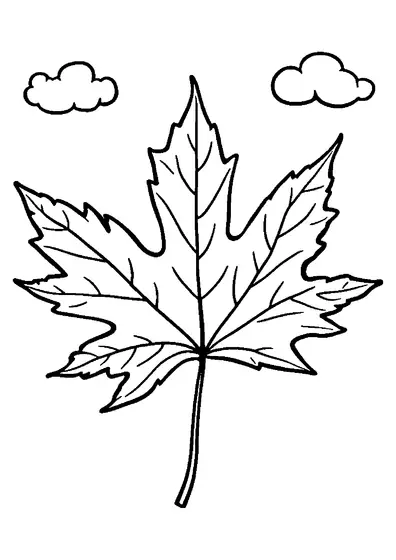
A single broad woodland leaf rests on the ground of a quiet forest clearing among smaller fallen foliage and standing tree trunks.

A4 format (landscape), black outlines on a white background · for home and classroom use
All coloring pages: Fall Leaves and Chestnuts Coloring Pages
Similar coloring pages: Fall Leaves and Chestnuts Coloring Pages



What else can you print? Free, no account needed
Custom Name Coloring Pages
Enter your child's name to generate a custom coloring page featuring large outline letters to color and decorate.
Open generator →Connect the Dots Generator
Eight connect-the-dots pictures across three difficulty levels. Features faint outline guides for younger children and dots only for older kids.
Open generator →Printables
Worksheets, tracing lines, mazes and dot-to-dots in A4.
Browse printables →
A Broad Woodland Leaf Resting in a Forest Clearing
A prominent, wide leaf lies flat on the forest floor, displaying visible leaf vein patterns across its surface. Surrounding the main leaf are several smaller leaves scattered along the soil, with sturdy tree trunks rising in the background of the woodland clearing.
The Role of Fallen Leaves in Forest Ecosystems
Fallen leaves on a forest floor play a vital role in woodland ecosystems by forming a protective layer of leaf litter that retains soil moisture. As leaves decompose over time, earthworms and fungi break down organic matter, returning rich nutrients back into the soil for living trees. Broad deciduous leaves change color in autumn because trees stop producing green chlorophyll when daylight hours shorten.
Natural Colors of Autumn Forest Leaves and Trees
- Broad central leaf: Crimson red, bright amber orange, or rich brown
- Smaller scattered leaves: Golden yellow, rust brown, or olive green
- Tree trunks: Dark charcoal gray, deep timber brown, or mossy bark gray
- Forest floor soil: Dark loam brown or earthy umber