
Fox by a Forest Stump with Chestnut Husks
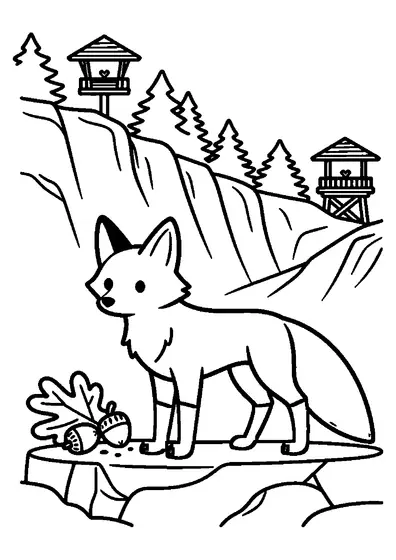
A wild fox rests beside an oak tree stump surrounded by cracked chestnut husks in an autumn forest setting.

A4 format (landscape), black outlines on a white background · for home and classroom use
All coloring pages: Fall Leaves and Chestnuts Coloring Pages
Similar coloring pages: Fall Leaves and Chestnuts Coloring Pages



What else can you print? Free, no account needed
Custom Name Coloring Pages
Enter your child's name to generate a custom coloring page featuring large outline letters to color and decorate.
Open generator →Connect the Dots Generator
Eight connect-the-dots pictures across three difficulty levels. Features faint outline guides for younger children and dots only for older kids.
Open generator →Printables
Worksheets, tracing lines, mazes and dot-to-dots in A4.
Browse printables →
Wild Foxes in Autumn Forest Habitats
Wild foxes roam woodland environments during autumn, searching for small rodents and fallen forest fruits among tree stumps. Fallen chestnut husks often cover the ground near old trees as woodland animals search for food.
Red Fox Adaptations for Woodland Life
Red foxes grow thick winter coats during late autumn to protect themselves against dropping woodland temperatures. Their sensitive whiskers and keen ears allow them to detect small prey rustling underneath thick layers of fallen forest leaves.
Real Colors of Forest Foxes and Chestnut Husks
- Fox fur coat: reddish-orange with a white chest and black leg markings
- Fox tail tip: pure white or pale cream
- Spiky chestnut husks: yellowish-green turning to dry brown when open
- Oak tree stump: dark brown bark with light yellowish-tan inner wood