
Fox beneath a Birch Tree by a Stone Bridge
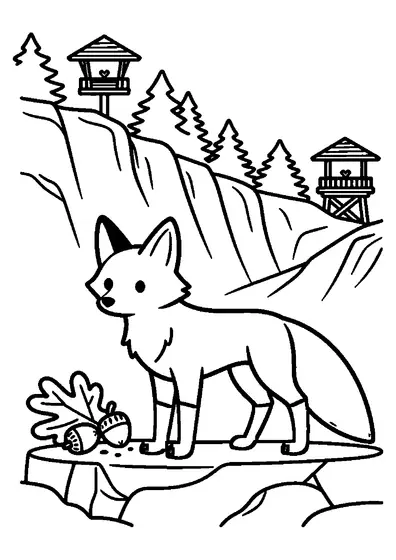
A wild fox stands along a quiet riverbank beneath birch foliage near a historic stone bridge.

A4 format (landscape), black outlines on a white background · for home and classroom use
All coloring pages: Fall Leaves and Chestnuts Coloring Pages
Similar coloring pages: Fall Leaves and Chestnuts Coloring Pages




What else can you print? Free, no account needed
Custom Name Coloring Pages
Enter your child's name to generate a custom coloring page featuring large outline letters to color and decorate.
Open generator →Connect the Dots Generator
Eight connect-the-dots pictures across three difficulty levels. Features faint outline guides for younger children and dots only for older kids.
Open generator →Printables
Worksheets, tracing lines, mazes and dot-to-dots in A4.
Browse printables →
Wildlife along the Riverbank
A fox with a bushy tail stands on the riverbank near an old stone bridge. Above the bank, a birch tree stands within a scenic autumn environment.
Unique Characteristics of Birch Trees
Birch trees are easily recognized by their white papery bark, which peels naturally in thin layers to protect the wood underneath. In autumn, their delicate triangular leaves turn a bright yellow before falling into nearby streams and rivers. Red foxes often travel along natural waterways because riverbanks provide abundant shelter and hunting paths.
Real Colors of Red Foxes and Birches
- Fox coat: reddish orange with a white throat and chest
- Fox tail tip: crisp white or pale cream
- Birch tree bark: chalky white with dark black horizontal markings
- Stone bridge: weathered gray, slate, and brownish granite
- River water: deep blue, dark green, or reflective sky shades