
Holy Family in the Bethlehem Stable
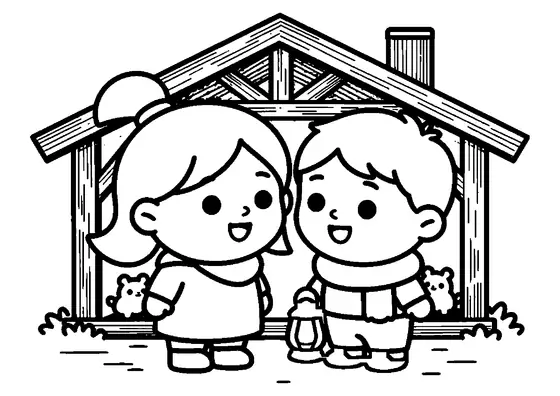
Mary, Joseph, and infant Jesus gather inside a simple timber barn located in Bethlehem.

A4 format (landscape), black outlines on a white background · for home and classroom use
All coloring pages: Religious Coloring Pages
Similar coloring pages: Religious Coloring Pages



What else can you print? Free, no account needed
Custom Name Coloring Pages
Enter your child's name to generate a custom coloring page featuring large outline letters to color and decorate.
Open generator →Connect the Dots Generator
Eight connect-the-dots pictures across three difficulty levels. Features faint outline guides for younger children and dots only for older kids.
Open generator →Printables
Worksheets, tracing lines, mazes and dot-to-dots in A4.
Browse printables →
The Historic Nativity Scene in Bethlehem
The story of the Nativity centers on a humble shelter in ancient Judea where travelers found rest. A rustic wooden structure filled with straw provided shelter on a cool night in the historic hill country around Bethlehem.
Historical Context of Ancient Animal Shelters
In ancient Palestine, animal shelters were often built into natural limestone caves or constructed from heavy wooden beams and mud brick. Stables provided protection for livestock such as sheep and donkeys from overnight desert temperature drops.
Traditional Colors of Nativity Settings
- Mary's robe: Traditional cobalt blue, soft white, or pale cream
- Joseph's tunic: Earthy brown, warm terracotta, or muted tan
- Infant Jesus swaddling cloth: Pure white, unbleached linen, or soft ivory
- Wooden stable beams: Dark oak, chestnut brown, or weathered timber gray
- Stable roof shingles: Aged brown wood or natural weathered gray