
Girl with a Basket of Herbs in a Cloister Garden
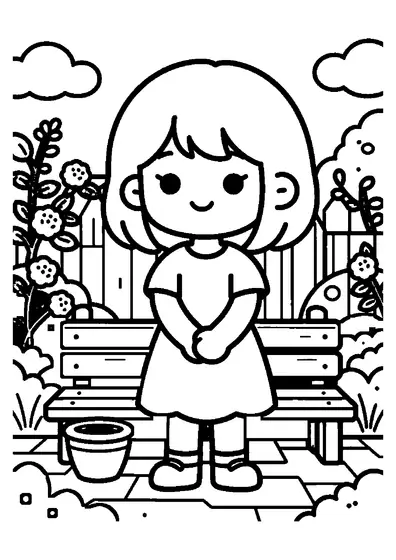
This illustration depicts a young girl gathering fresh herbs in a quiet monastery cloister courtyard featuring a stone fountain.

A4 format (portrait), black outlines on a white background · for home and classroom use
All coloring pages: Religious Coloring Pages
Similar coloring pages: Religious Coloring Pages





What else can you print? Free, no account needed
Custom Name Coloring Pages
Enter your child's name to generate a custom coloring page featuring large outline letters to color and decorate.
Open generator →Connect the Dots Generator
Eight connect-the-dots pictures across three difficulty levels. Features faint outline guides for younger children and dots only for older kids.
Open generator →Printables
Worksheets, tracing lines, mazes and dot-to-dots in A4.
Browse printables →
Monastery Cloister Gardens and Herb Gathering
In historical monastic life, cloister gardens served as peaceful central courtyards surrounded by covered walkways. Young helpers and resident gardeners cultivated medicinal herbs and vegetables within these enclosed spaces. A central fountain provided water for tending the plants and symbolization of life in traditional religious communities. Carrying baskets filled with freshly picked leaves allowed herbs to be transported directly to monastery kitchens and infirmaries.
Historical Uses of Monastic Herb Gardens
Monks and nuns in medieval Europe maintained organized garden beds specifically for growing healing plants like sage, thyme, and lavender. These sacred courtyards were designed in square or rectangular shapes to represent order, peace, and reflection. The sheltered microclimate inside high monastery walls protected delicate herbs from harsh winds, allowing them to thrive throughout the growing season.
Natural Colors of Cloister Gardens
- Fresh herbs: vibrant green, soft gray-green, or deep violet depending on the plant species
- Woven basket: warm beige, tan, or golden brown
- Cloister courtyard fountain: natural stone gray, slate, or weathered beige
- Courtyard stonework: charcoal gray, muted brown, or terracotta