
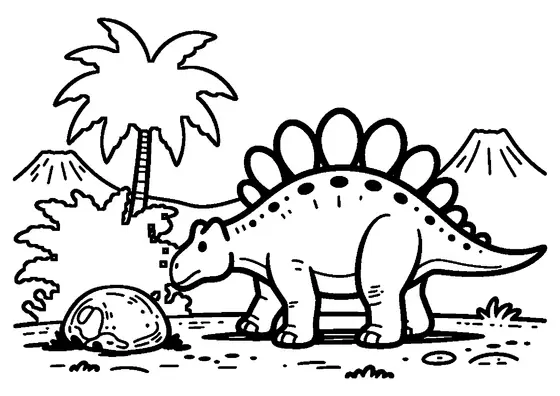
Triceratops in a Prehistoric Clearing
A three-horned Triceratops stands in a primeval landscape near a dinosaur egg as an active volcano looms in the distance.

A4 format (landscape), black outlines on a white background · for home and classroom use
All coloring pages: Printable Coloring Pages for Kids
Similar coloring pages: Printable Coloring Pages for Kids

What else can you print? Free, no account needed
Custom Name Coloring Pages
Enter your child's name to generate a custom coloring page featuring large outline letters to color and decorate.
Open generator →Connect the Dots Generator
Eight connect-the-dots pictures across three difficulty levels. Features faint outline guides for younger children and dots only for older kids.
Open generator →Printables
Worksheets, tracing lines, mazes and dot-to-dots in A4.
Browse printables →
Herbivorous Triceratops near a Volcano
The ancient terrain features a large Triceratops positioned alongside a dinosaur egg in an open prehistoric clearing. An active volcano dominates the background landscape, depicting the environmental setting where large herbivorous reptiles roamed millions of years ago.
Ancient Discoveries About Triceratops
The large neck frill of Triceratops may have helped regulate body temperature in addition to protecting against predators. Paleontologists have discovered that dinosaur eggs varied significantly in shape, ranging from spherical to elongated forms with textured shells. Volcanic ash deposits from prehistoric eruptions have helped scientists accurately date fossil layers around the world.
Reconstructed Colors of Prehistoric Reptiles
- Triceratops hide: brownish-gray, olive green, or dusty tan tones suitable for camouflage
- Horns and neck frill edges: pale gray, off-white, or weathered bone color
- Dinosaur eggshell: speckled beige, light gray, or muted reddish brown
- Volcano slopes: dark basalt gray, charcoal black, and reddish ash deposits
- Lava and volcanic smoke: bright orange-red fire with thick gray smoke plumes