
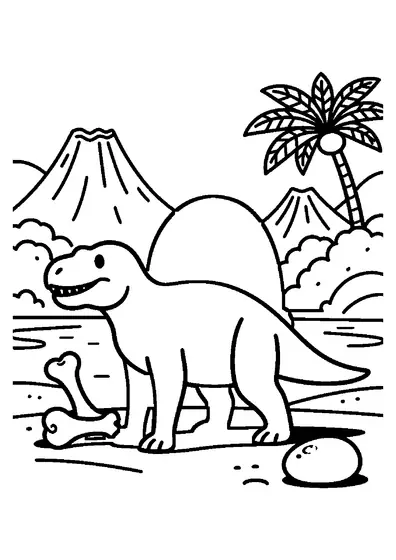
Spinosaurus Dinosaur Beside an Ancient River
The semi-aquatic Spinosaurus inhabited ancient riverbanks surrounded by dense ferns and active volcanoes during the Cretaceous period.

A4 format (portrait), black outlines on a white background · for home and classroom use
All coloring pages: Printable Coloring Pages for Kids
Similar coloring pages: Printable Coloring Pages for Kids



What else can you print? Free, no account needed
Custom Name Coloring Pages
Enter your child's name to generate a custom coloring page featuring large outline letters to color and decorate.
Open generator →Connect the Dots Generator
Eight connect-the-dots pictures across three difficulty levels. Features faint outline guides for younger children and dots only for older kids.
Open generator →Printables
Worksheets, tracing lines, mazes and dot-to-dots in A4.
Browse printables →
Spinosaurus Near Prehistoric Rivers
The Spinosaurus stands out among prehistoric reptiles due to the tall neural spines forming a distinct sail along its back. Living near ancient river systems, this predator hunted in shallow waters along muddy riverbanks. The surrounding prehistoric landscape often contained lush fern vegetation and distant active volcanoes that shaped the ancient climate.
Prehistoric Environments and Volcanic Activity
Volcanic eruptions during the Mesozoic Era enriched prehistoric soil with mineral ash, encouraging the dense growth of early ferns along river channels. Paleontological evidence indicates that Spinosaurus possessed dense bones and paddle-like feet, making it exceptionally adapted for hunting in river ecosystems.
Real Colors of Spinosaurus and Ancient Landscapes
- Spinosaurus skin: olive green, grayish brown, or tan
- Spinosaurus back sail: reddish brown, yellow, or patterned orange
- Prehistoric river water: murky green or muddy brown
- Ancient ferns: vibrant emerald green or olive
- Volcano cone: dark gray basalt or black ash rock