
Space Rover on a Rocky Planet
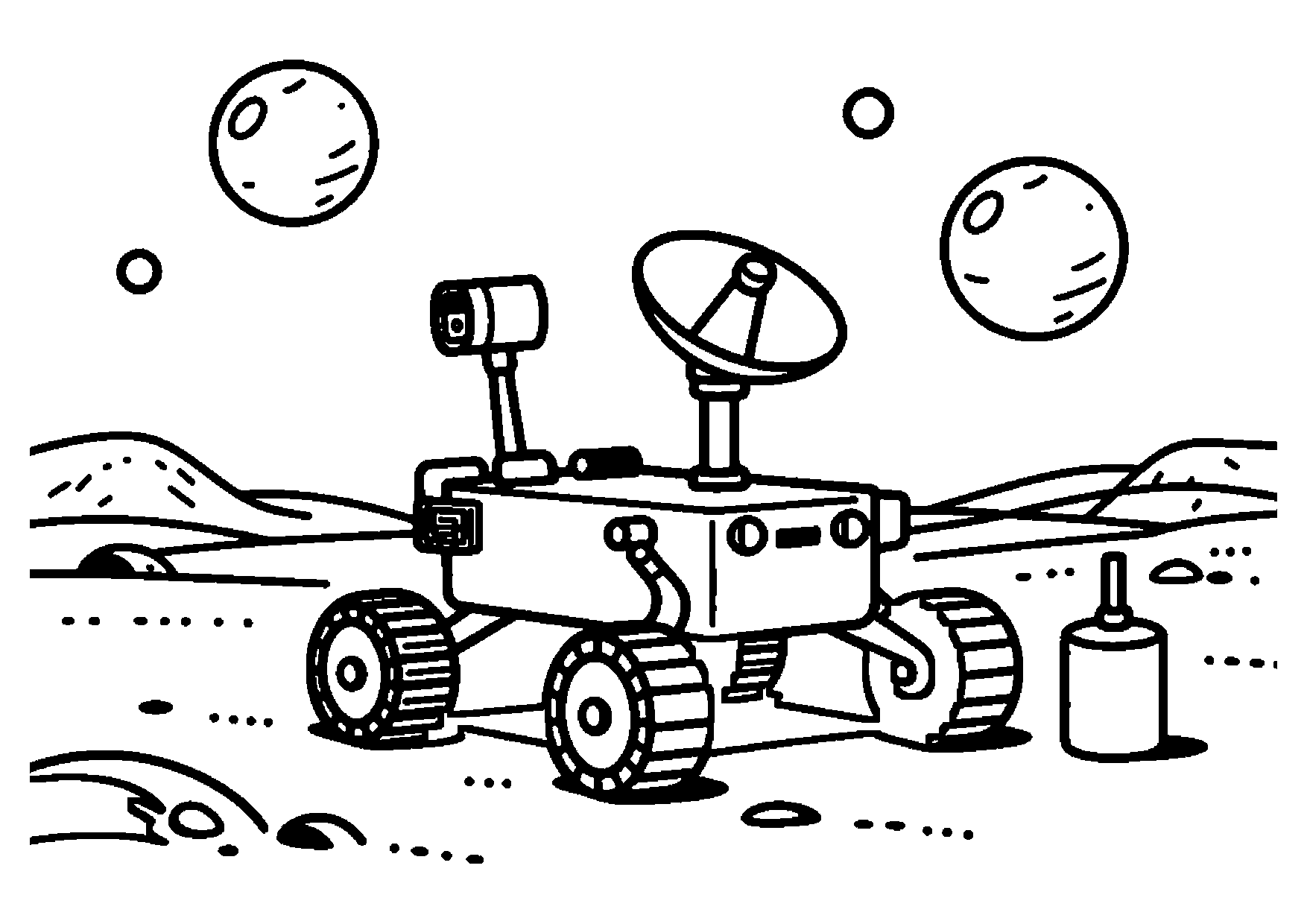
An autonomous planetary exploration vehicle travels across a distant world filled with jagged rocks and circular impact craters.
A4 format (landscape), black outlines on a white background · for home and classroom use
All coloring pages: Printable Coloring Pages for Kids
Similar coloring pages: Printable Coloring Pages for Kids

What else can you print? Free, no account needed
Custom Name Coloring Pages
Enter your child's name to generate a custom coloring page featuring large outline letters to color and decorate.
Open generator →Connect the Dots Generator
Eight connect-the-dots pictures across three difficulty levels. Features faint outline guides for younger children and dots only for older kids.
Open generator →Printables
Worksheets, tracing lines, mazes and dot-to-dots in A4.
Browse printables →
Robotic Space Rover on a Distant World
A heavy robotic rover navigates an alien landscape dotted with ancient craters and scattered rock formations. Equipped with a communications antenna and a dedicated sample container, the mechanical explorer collects geological data from the planetary ground.
How Space Rovers Survive Extreme Planetary Environments
Planetary rovers use special metal mesh wheels rather than rubber tires because rubber would harden and crack in extreme temperatures. Radioisotope thermoelectric generators or solar arrays power these autonomous vehicles, allowing them to operate millions of miles away from Earth for years.
Natural Colors of Planetary Rovers and Terrains
- Space rover chassis: Metallic silver or gold foil insulation designed to block intense thermal radiation
- Antenna dish: Matte white or aluminum gray, optimized for reflecting radiational heat
- Sample container: Brushed titanium gray or polished stainless steel
- Planetary rocks and soil: Rust red, dusty brown, or dark charcoal gray depending on mineral composition
- Impact craters: Pale ash gray or muted ochre where exposed subsurface dust settles