
Lynx on a Fallen Log in a Remote Forest
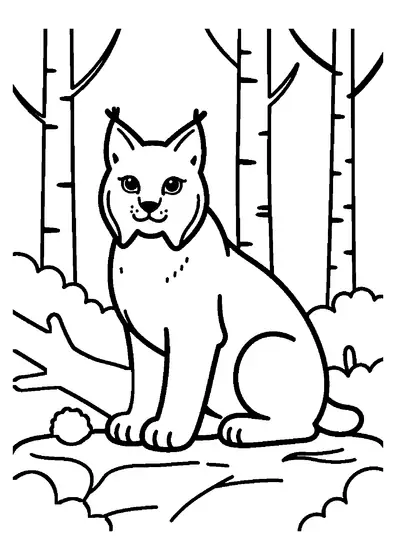
A lynx with tufted ears stands on a fallen tree trunk in a remote mountain forest.

A4 format (portrait), black outlines on a white background · for home and classroom use
All coloring pages: Printable Coloring Pages for Kids
Similar coloring pages: Printable Coloring Pages for Kids



What else can you print? Free, no account needed
Custom Name Coloring Pages
Enter your child's name to generate a custom coloring page featuring large outline letters to color and decorate.
Open generator →Connect the Dots Generator
Eight connect-the-dots pictures across three difficulty levels. Features faint outline guides for younger children and dots only for older kids.
Open generator →Printables
Worksheets, tracing lines, mazes and dot-to-dots in A4.
Browse printables →
A lynx on a forest log
The wild cat is shown on a fallen trunk surrounded by a mountain forest. Its fluffy ear tufts are one of the features that make a lynx easy to recognize. Forest cover offers this secretive hunter places to travel, rest, and watch for movement while remaining difficult to spot.
Why fallen trees matter in a forest
A fallen trunk does not stop being useful after a tree dies. As the wood slowly breaks down, it can hold moisture and provide shelter or food for many small organisms. Decaying wood also returns nutrients to the soil, supporting the continuing growth of the forest.
Real-world colors of a lynx and its habitat
- Lynx coat: tawny brown, reddish brown, or pale gray-brown depending on species and season
- Fur markings: dark brown or black spots, usually clearer on some individuals than others
- Ear tufts and ear tips: black
- Chest and belly fur: cream, pale tan, or whitish
- Fallen tree trunk: brown, gray, or greenish where moss grows naturally