
Historic Frigate by a Rocky Coast
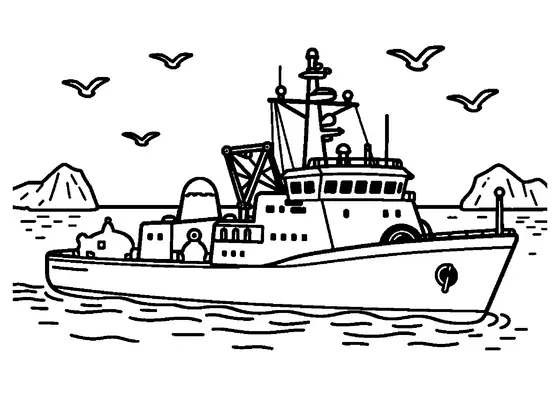
A maritime scene presents a historic three-masted frigate navigating coastal waters near a steep, rocky island.

A4 format (landscape), black outlines on a white background · for home and classroom use
All coloring pages: Printable Coloring Pages for Kids
Similar coloring pages: Printable Coloring Pages for Kids




What else can you print? Free, no account needed
Custom Name Coloring Pages
Enter your child's name to generate a custom coloring page featuring large outline letters to color and decorate.
Open generator →Connect the Dots Generator
Eight connect-the-dots pictures across three difficulty levels. Features faint outline guides for younger children and dots only for older kids.
Open generator →Printables
Worksheets, tracing lines, mazes and dot-to-dots in A4.
Browse printables →
Historic Three-Masted Frigate near Coastal Rocks
During the Age of Sail, three-masted frigates were fast, maneuverable warships and merchant vessels equipped with multiple square-rigged sails. Navigating near rocky islands required skilled seamanship to avoid shallow reefs and sudden coastal winds. Rugged island coasts feature weathered stone cliffs formed by centuries of crashing ocean waves.
Sailing Frigates in Maritime History
Frigates served as scouts and patrol vessels for naval fleets in the eighteenth and nineteenth centuries. Their wooden hulls were built from sturdy timber such as oak to withstand harsh weather and long sea voyages. Sailors relied on wind patterns and paper charts to navigate around dangerous coastal formations.
Real Colors of Historic Sailing Ships
- Ship hull: dark brown wooden planks with black trim or white stripes
- Canvas sails: off-white, cream, or light beige fabric
- Rocky island cliffs: slate gray, tan, or dark brown stone
- Coastal water: emerald green or deep blue near rocky shores