
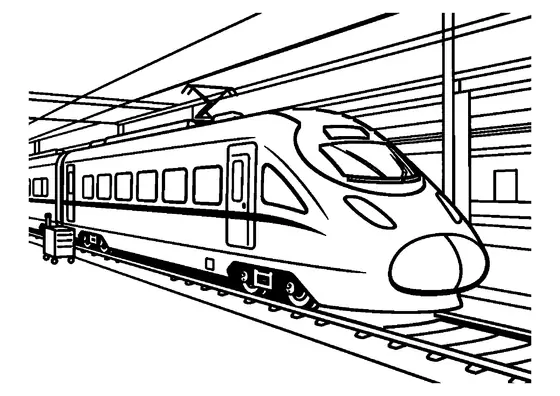
Express Train at a Modern Railway Platform
A detailed illustration featuring a sleek high-speed express train halted alongside a sheltered station platform.

A4 format (landscape), black outlines on a white background · for home and classroom use
All coloring pages: Printable Coloring Pages for Kids
Similar coloring pages: Printable Coloring Pages for Kids

What else can you print? Free, no account needed
Custom Name Coloring Pages
Enter your child's name to generate a custom coloring page featuring large outline letters to color and decorate.
Open generator →Connect the Dots Generator
Eight connect-the-dots pictures across three difficulty levels. Features faint outline guides for younger children and dots only for older kids.
Open generator →Printables
Worksheets, tracing lines, mazes and dot-to-dots in A4.
Browse printables →
Modern High-Speed Trains at Railway Platforms
High-speed passenger trains connect major metropolitan areas efficiently using aerodynamically designed trainsets and specialized track networks. Modern station platforms feature covered canopies to shield passengers from weather while seamlessly accommodating precise boarding systems. Railway networks rely on advanced signaling and electric power infrastructure to transport travelers smoothly between destinations.
Aerodynamic Engineering in Express Rail Travel
High-speed trains utilize sloped nose cones inspired by aquatic birds and high-speed projectiles to reduce air resistance and prevent noise spikes when entering tunnels. Electric power is typically gathered through pantographs connected to overhead catenary wires along the tracks.
Authentic Colors of Modern Passenger Rail
- Train locomotive body: Bright silver, crisp white, or deep blue with vivid accent stripes
- Station platform floor: Charcoal gray, concrete gray, or reddish brick pavers
- Covered platform roof canopy: Dark steel gray, translucent blue, or metallic silver
- Train windows: Tinted dark gray, black, or subtle blue