
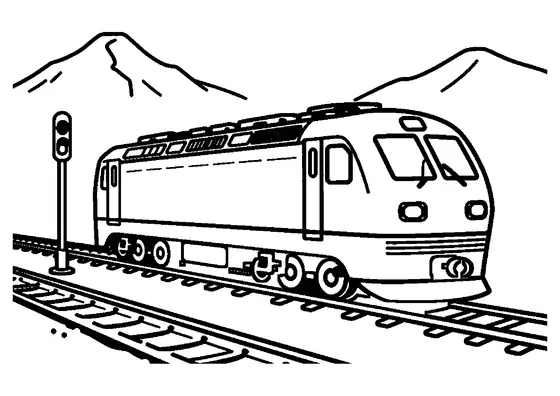
Diesel Locomotive at a Freight Yard
Heavy cargo transport comes to life through a scene set in a busy railway station.

A4 format (landscape), black outlines on a white background · for home and classroom use
All coloring pages: Printable Coloring Pages for Kids
Similar coloring pages: Printable Coloring Pages for Kids


What else can you print? Free, no account needed
Custom Name Coloring Pages
Enter your child's name to generate a custom coloring page featuring large outline letters to color and decorate.
Open generator →Connect the Dots Generator
Eight connect-the-dots pictures across three difficulty levels. Features faint outline guides for younger children and dots only for older kids.
Open generator →Printables
Worksheets, tracing lines, mazes and dot-to-dots in A4.
Browse printables →
Diesel Trains at Work in Cargo Hubs
Freight yards serve as crucial transition hubs where large diesel locomotives move heavy goods across long distances. In this setting, a powerful engine stands alongside stored cargo crates and a tall water tower. Facilities like these allow trains to pause for maintenance, switch tracks, or organize freight before continuing their journey across industrial routes.
Interesting Facts About Rail Freight Facilities
Water towers were historically essential at rail yards for refilling steam engines, though modern yards often preserve them as historical landmarks or water reserves. Additionally, freight yards rely on complex signaling systems to organize hundreds of cargo containers daily without interrupting main line traffic. Most diesel trains actually use diesel-electric systems, where a diesel engine powers a generator that produces electricity for the wheels.
Real Colors of Railway Equipment
- Diesel locomotive body: Typically painted dark yellow, deep blue, or green with bright safety stripes.
- Locomotive steel wheels: Dark gray or weathered black with metallic accents.
- Cargo crates: Natural wooden tan, rusted brown, or industrial blue.
- Water tower tank: Weathered silver, gray metal, or faded red brick.
- Freight yard grounds: Gravel gray, dark stone, or dusty brown.