
Brontosaurus by a Waterfall in a Prehistoric Valley
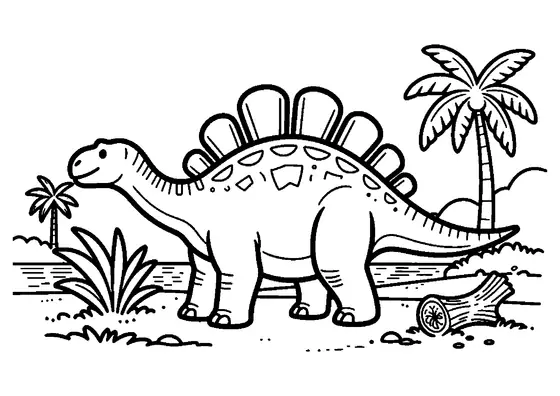
A large Brontosaurus stands beside a waterfall in a rocky valley from the prehistoric world.

A4 format (portrait), black outlines on a white background · for home and classroom use
All coloring pages: Printable Coloring Pages for Kids
Similar coloring pages: Printable Coloring Pages for Kids
What else can you print? Free, no account needed
Custom Name Coloring Pages
Enter your child's name to generate a custom coloring page featuring large outline letters to color and decorate.
Open generator →Connect the Dots Generator
Eight connect-the-dots pictures across three difficulty levels. Features faint outline guides for younger children and dots only for older kids.
Open generator →Printables
Worksheets, tracing lines, mazes and dot-to-dots in A4.
Browse printables →
Brontosaurus Beside a Prehistoric Waterfall
The scene places the huge, long-necked dinosaur near falling water and rocky valley walls. Brontosaurus walked on four sturdy legs and carried a long tail behind its massive body. The waterfall and rugged surroundings create a broad prehistoric habitat without showing the modern world.
Water in a Dinosaur’s Environment
Large plant-eating dinosaurs needed access to vegetation and water in their habitats. Waterfalls form where flowing water passes over a steep drop in resistant rock, and erosion gradually changes the surrounding valley. Fossil evidence helps scientists study ancient landscapes as well as the animals that lived in them.
Evidence-Based Colors for Brontosaurus and the Valley
- Brontosaurus skin: its exact color is unknown; natural browns, greens, or grays are plausible choices
- Dinosaur underside: could be shown in a lighter shade than the back
- Rocks: commonly gray, brown, tan, rust red, or nearly black
- Waterfall: clear water often appears white where it foams and pale blue where it reflects the sky
- Valley ground: may be brown, tan, reddish, or gray depending on the rock and soil