
Boy Building at a Workbench in a Home Garage
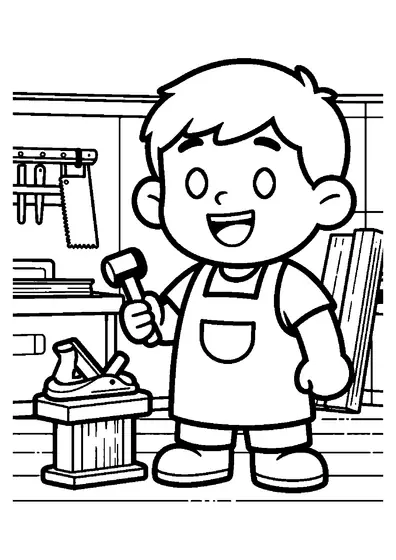
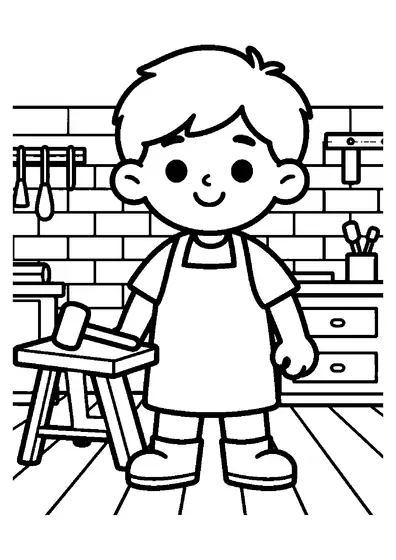
A young builder holds a hammer while standing beside a sturdy wooden workbench inside a garage.

A4 format (portrait), black outlines on a white background · for home and classroom use
All coloring pages: Printable Coloring Pages for Kids
Similar coloring pages: Printable Coloring Pages for Kids



What else can you print? Free, no account needed
Custom Name Coloring Pages
Enter your child's name to generate a custom coloring page featuring large outline letters to color and decorate.
Open generator →Connect the Dots Generator
Eight connect-the-dots pictures across three difficulty levels. Features faint outline guides for younger children and dots only for older kids.
Open generator →Printables
Worksheets, tracing lines, mazes and dot-to-dots in A4.
Browse printables →
Boy Working at a Workbench in the Garage
This scene portrays a young builder engaged in a woodworking project inside a home garage. Armed with a hand hammer, the child works alongside a solid wooden workbench designed for crafting.
Fun Facts About Woodworking and Hand Tools
The hammer is one of humanity's oldest tools, with early versions made of stone attached to wooden handles thousands of years ago. Traditional wooden workbenches are built from heavy hardwoods like beech or oak so they do not slide or vibrate while pounding nails or sawing timber. Measuring accurately before cutting is a fundamental rule in woodworking, summed up by the classic advice to measure twice and cut once.
Real Colors of Workshop Tools and Wood
- Workbench top and legs: Natural oak brown, warm pine yellow, or honey maple finish
- Hammer head: Polished steel silver or dark iron gray
- Hammer handle: Natural hickory wood, yellow fiberglass, or black rubber grip
- Wooden craft boards: Pale cedar cream, light birch tan, or pine yellow