
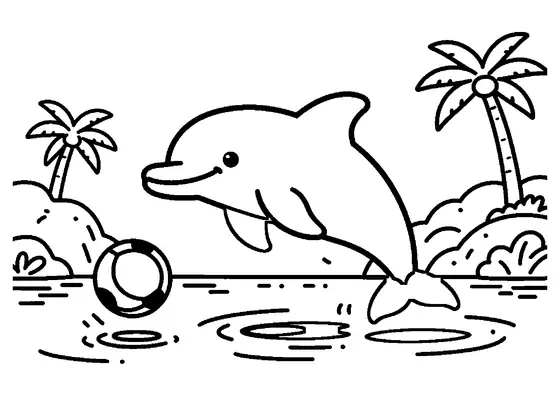
Bottlenose Dolphin Near a Coral Atoll
A wild bottlenose dolphin glides through warm ocean waters above a vibrant coral reef.

A4 format (landscape), black outlines on a white background · for home and classroom use
All coloring pages: Printable Coloring Pages for Kids
Similar coloring pages: Printable Coloring Pages for Kids


What else can you print? Free, no account needed
Custom Name Coloring Pages
Enter your child's name to generate a custom coloring page featuring large outline letters to color and decorate.
Open generator →Connect the Dots Generator
Eight connect-the-dots pictures across three difficulty levels. Features faint outline guides for younger children and dots only for older kids.
Open generator →Printables
Worksheets, tracing lines, mazes and dot-to-dots in A4.
Browse printables →
Bottlenose Dolphins in Coral Reef Ecosystems
Marine habitats near shallow ocean reefs provide sheltered swimming spaces for bottlenose dolphins. These marine mammals navigate clear coastal waters while searching for small fish near coral formations.
Ocean Facts About Coral Reef Habitats
Bottlenose dolphins use high-frequency echolocation clicks to locate prey hidden inside crevices of coral structures. Shallow atolls create natural lagoons where sea life thrives due to abundant sunlight and warm water temperatures.
Natural Colors of Dolphins and Reefs
- Bottlenose dolphin skin: Smooth slate gray on top with a light gray or pinkish underside
- Dolphin blowhole and snout: Dark charcoal gray
- Living coral formations: Pink, orange, purple, and yellow green
- Shallow ocean water: Bright turquoise and sky blue
- Ocean floor sand: Pale cream or beige