
Tank on a Peatland Training Course
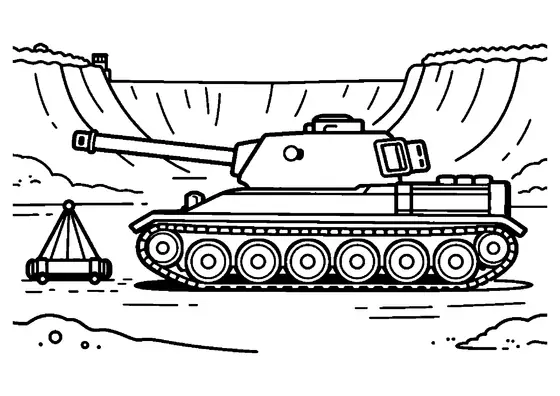
A heavy tank navigates a peatland obstacle course featuring wooden crossings, mud tracks, peat mounds, and a water storage barrel.

A4 format (landscape), black outlines on a white background · for home and classroom use
All coloring pages: Military Coloring Pages
Similar coloring pages: Military Coloring Pages


What else can you print? Free, no account needed
Custom Name Coloring Pages
Enter your child's name to generate a custom coloring page featuring large outline letters to color and decorate.
Open generator →Connect the Dots Generator
Eight connect-the-dots pictures across three difficulty levels. Features faint outline guides for younger children and dots only for older kids.
Open generator →Printables
Worksheets, tracing lines, mazes and dot-to-dots in A4.
Browse printables →
Tracked Vehicle Navigating a Peatland Training Ground
A heavy tank moves across a peatland vehicle testing course. The terrain includes wet mud tracks, raised mounds of harvested peat, and sturdy wooden beam crossings laid down to bridge soft soil. A water barrel stands along the edge of the obstacle path.
Facts About Soft Terrain Vehicle Testing
Peatlands consist of waterlogged organic soil that creates extreme driving challenges for heavy vehicles. Continuous track systems distribute vehicle weight over a wide surface area to keep heavy machinery from sinking into boggy earth. Wooden timber mats are frequently arranged across marshland to create temporary roads.
Realistic Colors of Peatland Terrain and Tracked Vehicles
- Tank armored exterior: Olive drab, tan, or camouflage green
- Peat soil and mounds: Dark brown, black, or rich umber
- Muddy tire tracks: Wet brown or dark gray
- Wooden beams: Weathered brown, tan, or gray
- Water storage barrel: Blue, dark gray, or rusty brown