
Tank at a Pine Forest Training Ground
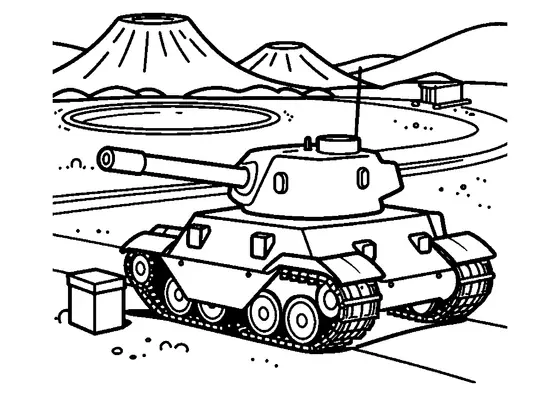
A heavy armored vehicle with wide tracks navigates through a sandy clearing in a pine forest training area.

A4 format (landscape), black outlines on a white background · for home and classroom use
All coloring pages: Military Coloring Pages
Similar coloring pages: Military Coloring Pages




What else can you print? Free, no account needed
Custom Name Coloring Pages
Enter your child's name to generate a custom coloring page featuring large outline letters to color and decorate.
Open generator →Connect the Dots Generator
Eight connect-the-dots pictures across three difficulty levels. Features faint outline guides for younger children and dots only for older kids.
Open generator →Printables
Worksheets, tracing lines, mazes and dot-to-dots in A4.
Browse printables →
Armored Vehicle in a Pine Woodland Training Area
Training grounds located inside pine forests present unique conditions for armored vehicles. Sandy soil beneath pine trees requires wide tracks to maintain steady momentum and prevent the heavy machine from getting bogged down. Driving through forested terrain teaches operators how to maneuver between tree trunks while keeping the vehicle concealed from aerial observation.
Camouflage and Forest Navigation
Evergreen pine forests stay green year-round, which makes green and brown woodland camouflage effective in every season. Drivers in forest zones rely heavily on spotters or periscopes to avoid low-hanging branches and tree roots. The scent of pine resin often fills the air around forest tracks as heavy machinery crushes fallen needles and soil.
Colors of Forest Vehicles and Woodlands
- Vehicle body: dark green, woodland camouflage, or matte khaki
- Vehicle tracks: dark metallic gray with embedded soil
- Pine tree needles: deep forest green
- Tree trunks: reddish-brown or dark gray bark
- Sandy ground: pale tan, beige, or yellow-brown sand