
Helicopter at a Desert Base
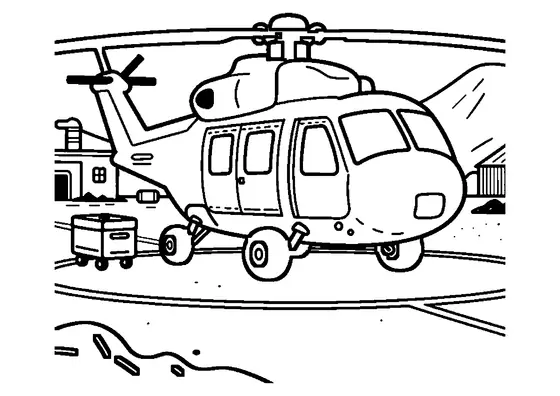
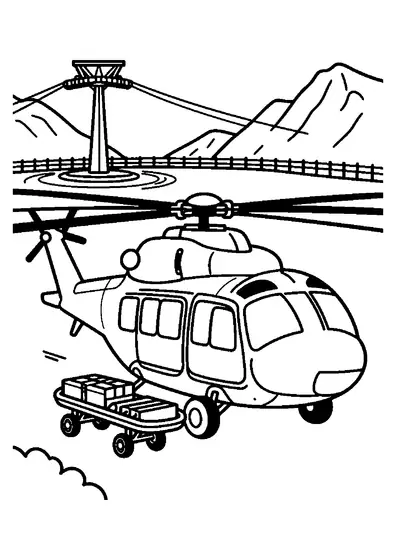
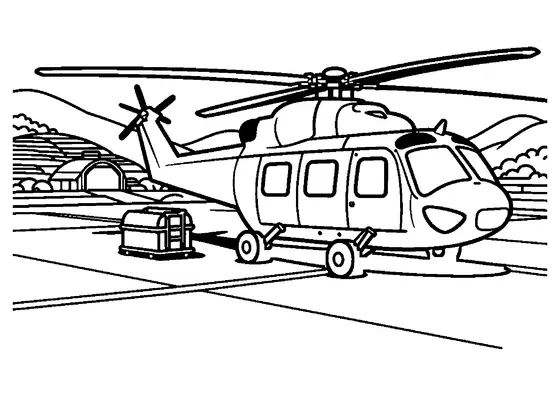
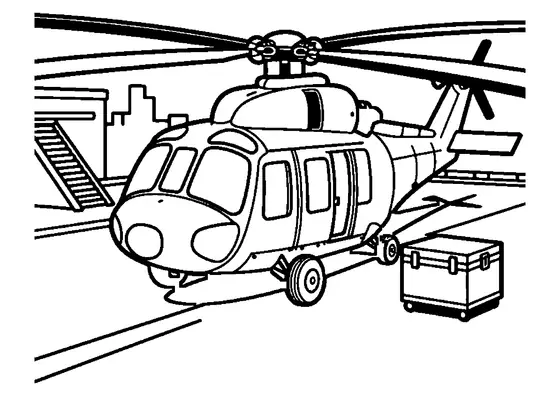
A rotorcraft rests on a designated landing pad at a remote desert base near cargo crates and fuel storage tanks.

A4 format (landscape), black outlines on a white background · for home and classroom use
All coloring pages: Military Coloring Pages
Similar coloring pages: Military Coloring Pages


What else can you print? Free, no account needed
Custom Name Coloring Pages
Enter your child's name to generate a custom coloring page featuring large outline letters to color and decorate.
Open generator →Connect the Dots Generator
Eight connect-the-dots pictures across three difficulty levels. Features faint outline guides for younger children and dots only for older kids.
Open generator →Printables
Worksheets, tracing lines, mazes and dot-to-dots in A4.
Browse printables →
Desert Base Helicopter Operations
A twin-rotor helicopter rests on a concrete landing pad within an arid training site. Heavy wooden supply crates and a large cylindrical storage tank sit adjacent to the landing area.
Facts About Desert Aviation Stations
Desert airbases utilize ground landing pads to protect rotor engines from kicking up loose sand during takeoff and landing. Fuel tanks situated near landing spots allow swift refueling operations in dry, isolated operational regions.
Realistic Colors of Desert Aviation Sites
- Helicopter body: desert tan or olive drab
- Landing pad surface: pale gray concrete with yellow paint markings
- Supply storage crate: natural wood brown or dark green
- Liquid storage tank: weathered white or galvanized steel gray