
Armored Vehicle at an Abandoned Airfield
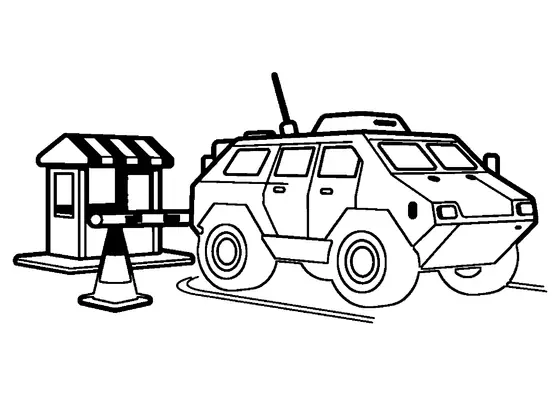
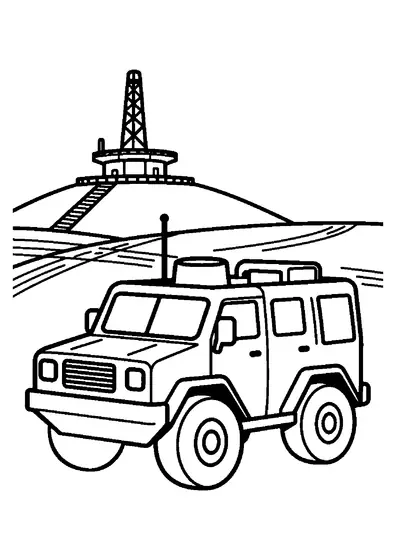
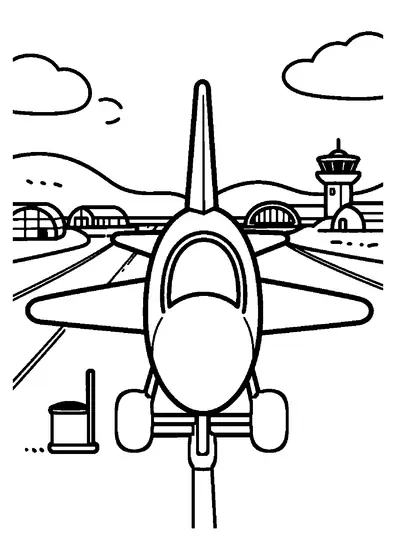
An armored vehicle rests on a cracked runway next to an old aircraft shelter at a quiet training airfield.

A4 format (portrait), black outlines on a white background · for home and classroom use
All coloring pages: Military Coloring Pages
Similar coloring pages: Military Coloring Pages


What else can you print? Free, no account needed
Custom Name Coloring Pages
Enter your child's name to generate a custom coloring page featuring large outline letters to color and decorate.
Open generator →Connect the Dots Generator
Eight connect-the-dots pictures across three difficulty levels. Features faint outline guides for younger children and dots only for older kids.
Open generator →Printables
Worksheets, tracing lines, mazes and dot-to-dots in A4.
Browse printables →
Armored Vehicle at an Unused Training Facility
Positioned at an angle on an unused airfield runway, an armored vehicle stands near a tall communications mast and a large protective shelter. Weathered concrete tiles and cracked pavement form the ground around the former air base.
Historical Airfields and Military Training Grounds
Former military airfields often transition into specialized ground vehicle testing sites or emergency training zones after primary flight operations cease. Hardened aircraft shelters built from thick reinforced concrete were originally designed to protect planes from extreme weather and aerial hazards. Communication masts situated near runways provided high-frequency radio links to direct incoming aircraft and ground crews.
Real Colors of Airfields and Ground Vehicles
- Armored vehicle body: Camouflage green, desert sand, or slate gray
- Cracked concrete runway: Weathered light gray with dark gray pavement seams
- Aircraft shelter exterior: Aged concrete gray, moss green, or faded stone tone
- Steel communications mast: Galvanized silver, dark gray, or rust red
- Dry ground vegetation: Earthy brown, yellowed grass, or pale tan