
Armored Personnel Carrier on a Wetland Causeway
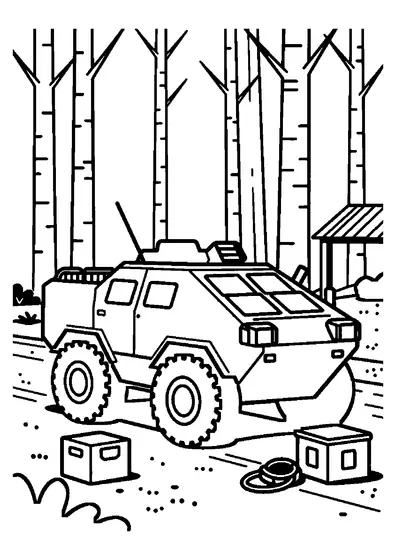
A heavy transport vehicle moves along an elevated causeway crossing wetland terrain filled with tall reeds.

A4 format (landscape), black outlines on a white background · for home and classroom use
All coloring pages: Military Coloring Pages
Similar coloring pages: Military Coloring Pages



What else can you print? Free, no account needed
Custom Name Coloring Pages
Enter your child's name to generate a custom coloring page featuring large outline letters to color and decorate.
Open generator →Connect the Dots Generator
Eight connect-the-dots pictures across three difficulty levels. Features faint outline guides for younger children and dots only for older kids.
Open generator →Printables
Worksheets, tracing lines, mazes and dot-to-dots in A4.
Browse printables →
Transport Vehicles on Wetland Causeways
Causeways through marshy environments provide stable passage across shallow waters and muddy ground. Elevated roads allow heavy vehicles to travel through wetland regions without becoming stuck in wet soil, while nearby wooden footbridges, utility pallets, and ropes support ground personnel navigating marshy terrain.
Navigation in Wetland Ecosystems
Wetlands present unique challenges for ground transport because mud and standing water soften soil stability. Engineers construct raised causeways with packed gravel or timber foundations to distribute heavy vehicle weight evenly across soft ground. Tall reeds thriving along marsh edges help absorb excess water and protect soil from erosion along causeway embankments.
Natural Colors of Wetland Passages
- Armored vehicle body: olive drab, camouflage green, or desert tan
- Wetland causeway path: dark brown dirt, damp mud, or grayish gravel
- Reeds: olive green, golden brown, or yellowish green
- Footbridge: weathered gray-brown or natural wood tan
- Pallet and coiled rope: pale tan, hemp brown, or unpainted timber