
Windmill Among the Polders
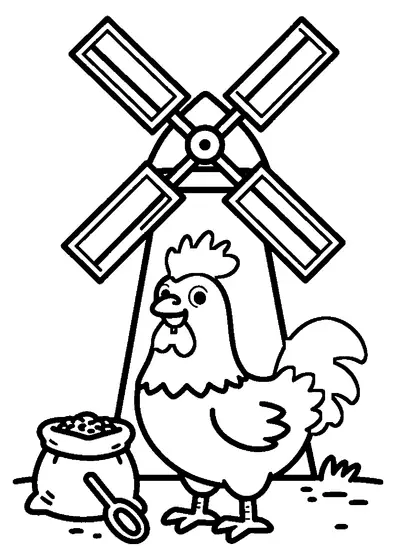
A traditional Dutch windmill rests near drainage canals across reclaimed polder land, alongside stacked grain sacks and a wooden crate.

A4 format (landscape), black outlines on a white background · for home and classroom use
All coloring pages: House Coloring Pages
Similar coloring pages: House Coloring Pages


What else can you print? Free, no account needed
Custom Name Coloring Pages
Enter your child's name to generate a custom coloring page featuring large outline letters to color and decorate.
Open generator →Connect the Dots Generator
Eight connect-the-dots pictures across three difficulty levels. Features faint outline guides for younger children and dots only for older kids.
Open generator →Printables
Worksheets, tracing lines, mazes and dot-to-dots in A4.
Browse printables →
Traditional Windmills of the Reclaimed Polders
Windmills have played a crucial role in water management and agriculture across flat, low-lying regions known as polders. These engineering structures harness wind power using large spinning sails to turn machinery inside the wooden or brick tower. Canals surround the fields to collect excess water, while grain sacks and wooden crates mark the active storage of harvested crops.
Historical Facts About Windmills and Canals
Polders are areas of land reclaimed from lakes or sea beds by building dikes and pumping water out through network channels. Early drainage windmills used internal wooden archimedes screws to lift water upward into higher canals. Windmill caps can rotate full circle so the giant blades always face directly into incoming wind gusts.
Authentic Colors of Polder Windmills
- Windmill body structure: dark brown timber, weathered gray wood, or red brick
- Rotating sail frames: off-white canvas with dark wooden beams
- Wooden storage crate: light pine, cedar brown, or tan wood grain
- Woven grain sacks: burlap beige or rustic light brown
- Polder canal water: deep blue-green or reflective slate gray