
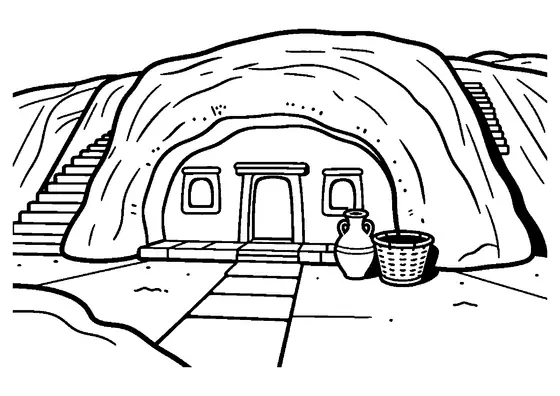
Sod House on the Prairie
This historical homestead scene features an earth-covered dwelling built on a vast, open prairie.

A4 format (landscape), black outlines on a white background · for home and classroom use
All coloring pages: House Coloring Pages
Similar coloring pages: House Coloring Pages



What else can you print? Free, no account needed
Custom Name Coloring Pages
Enter your child's name to generate a custom coloring page featuring large outline letters to color and decorate.
Open generator →Connect the Dots Generator
Eight connect-the-dots pictures across three difficulty levels. Features faint outline guides for younger children and dots only for older kids.
Open generator →Printables
Worksheets, tracing lines, mazes and dot-to-dots in A4.
Browse printables →
Historic Sod Dwellings on the Open Prairie
A low sod house built directly into the ground sits amidst a wide prairie landscape. Next to the earth-roofed home stand a manual water pump and a wooden storage barrel. A boundary fence stretches across the terrain, leading toward rolling hills in the background.
Practical Prairie Architecture
Early settlers on the North American plains built sod houses because timber was scarce across the treeless grasslands. The thick walls constructed from stacked turf provided natural insulation against harsh winter winds and intense summer heat. Water pumps installed nearby tapped into underground aquifers, serving as the main water source for frontier homesteads.
Natural Colors of Prairie Homesteads
- Sod roof and walls: dark brown earth and dry golden-green grass roots
- Prairie terrain: pale green, tan, and faded yellow during dry seasons
- Manual water pump: weathered dark gray or cast iron black
- Wooden storage barrel: brownish-gray aged timber with dark metal hoops
- Distant hills: muted soft blue and dusty purple under natural sunlight